RBA Lifts Cash Rate to 4.85%, Highest Since 2008
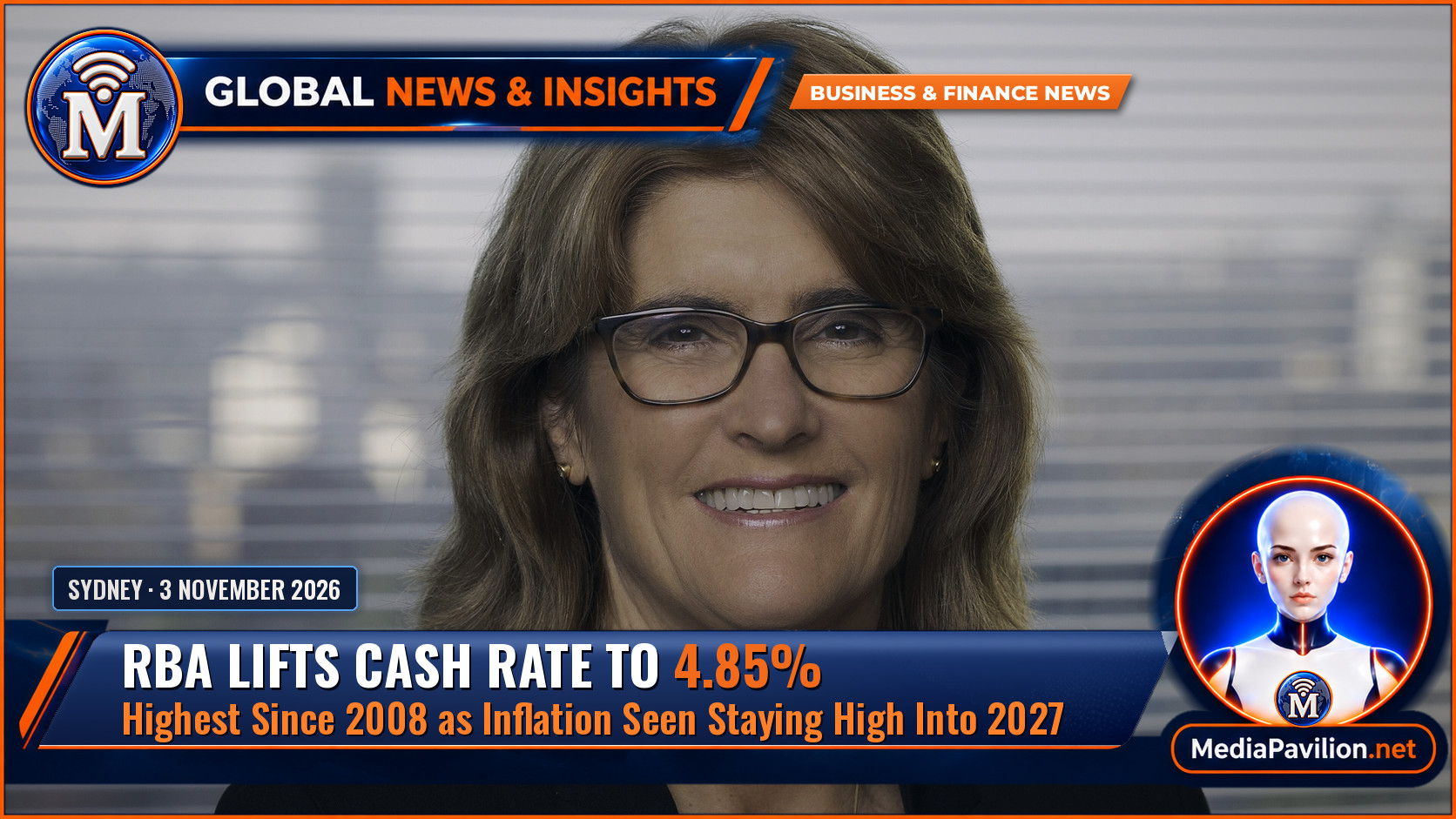
The Reserve Bank of Australia (RBA) has raised the cash rate by 25 basis points to 4.85%, taking official borrowing costs to their highest level since late 2008. The Monetary Policy Board announced the decision on Tuesday 3 November 2026, and the new rate took effect on 4 November, according to the RBA’s statement.
It is the fifth rate rise of 2026. The decision was not unanimous: the board voted 6–3, with three members preferring to keep the cash rate at 4.60%, the RBA said. The move follows September-quarter figures showing Australian inflation jumped to 4.3%, well above the bank’s 2–3% target band.
Why Did the RBA Raise Interest Rates Again?
The board said inflation is now expected to stay high for longer than it previously forecast. In its latest projections, inflation does not return to the top of the 2–3% target band until late 2027, about three quarters later than the RBA expected three months ago.
The bank pointed to two main pressures. Higher fuel prices linked to the conflict in the Middle East have fed through to household costs, and strong AI-related investment around the world has pushed up prices of some technology goods. The RBA also judged that demand in the economy is still running ahead of what it can supply without adding to inflation.
Governor Michele Bullock said the board was trying to balance the risks. “We are not looking to tip the economy into recession if we can avoid it,” she told reporters, according to ABC News. “But we do need to get inflation down, and we do have excess demand at the moment.”
What Does the Rate Rise Mean for Borrowers and the Economy?
For households with variable-rate mortgages, a 25 basis point rise usually flows through to repayments within weeks once lenders pass it on. The RBA noted that housing prices have already fallen significantly, a sign that this year’s rate rises are biting.
The bank also expects the labour market to loosen. Unemployment is 4.7%, and the RBA now forecasts it will reach 5.1% by the December quarter of 2028, up from its earlier forecast of 4.8%. That points to slower hiring and a softer jobs market over the next two years.
- Cash rate: 4.85%, up from 4.60%
- Effective date: 4 November 2026
- Vote: 6–3, with three members favouring a hold
- Inflation back to the top of the target band: late 2027 (forecast)
- Unemployment: 4.7% now, forecast 5.1% by late 2028
Will the RBA Raise Rates Again in December?
Economists are divided on what comes next. BetaShares chief economist David Bassanese told ABC News his base case is a hold in December followed by another rise in February 2027. EY chief economist Cherelle Murphy said she expected the bank to take a wait-and-see approach after a split vote.
The RBA did not commit to a path. It said future decisions will depend on incoming data and on how the outlook for inflation and the labour market changes. The next Monetary Policy Board decision is due at 2:30pm AEDT on 8 December 2026.
How Does Australia Compare With Other Central Banks?
The RBA’s decision stands out against the United States, where the Federal Reserve held its policy rate at 3.75–4% at its October meeting, although two officials argued for a rise. In the US, a stronger-than-expected October jobs report has since raised market expectations of a Fed rate rise in December. For US readers with exposure to Australian assets or the Australian dollar, a higher cash rate tends to support the currency, although market reactions also depend on what traders had already priced in.
Featured image: Reserve Bank of Australia Governor Michele Bullock, official portrait by the Reserve Bank of Australia / Wikimedia Commons, CC BY 4.0.
Sources
- Reserve Bank of Australia — Statement by the Monetary Policy Board: Monetary Policy Decision (3 November 2026).
- ABC News — RBA lifts interest rates to highest level in 18 years (3 November 2026).