US Economy Adds 165,000 Jobs in October as Unemployment Dips to 4.1%
The US economy added 165,000 jobs in October, far more than economists expected, and the unemployment rate dipped to 4.1%, the Bureau of Labor Statistics (BLS) reported on Friday 6 November. Economists polled by Dow Jones had forecast a gain of just 59,000, while a Reuters poll pointed to 65,000, according to CNBC and Reuters.
The report also revised earlier months sharply higher. August’s gain is now put at 186,000, up 53,000 from the previous estimate, and September’s at 60,000, up 31,000. Together the revisions added 84,000 jobs to the previous two months. October’s figure is well above the average monthly gain of 48,000 over the prior 12 months, the BLS said.
Which Industries Added the Most Jobs?
Hiring was broader than in recent months, when healthcare accounted for most of the gains. Professional and business services led with 70,000 new jobs, well above its 12-month average of 15,000. Healthcare added 42,000, with gains in hospitals, home healthcare and outpatient centres.
- Professional and business services: +70,000
- Healthcare: +42,000
- Transportation and warehousing: +25,000, mostly couriers and messengers
- Manufacturing: +19,000, led by computer and electronic products
- Unemployment rate: 4.1%, from 4.2% in September
- Average hourly earnings: $38.00, up 0.4% on the month and 3.1% on the year
“The overall picture is a labor market that is on much better footing than a year ago,” Heather Long, chief economist at Navy Federal Credit Union, told CNBC. “In 2025, the economy added barely 10,000 jobs a month and basically all were in healthcare.”
Are Wages Keeping Up With Inflation?
Not quite. Average hourly earnings rose 14 cents to $38.00, the biggest monthly gain since January according to AP, but the 3.1% annual rise still trails inflation. Consumer prices rose 3.7% in the year to September, USA Today noted, so many workers are still losing spending power in real terms.
That squeeze on household budgets was a central issue in this week’s elections, in which Democrats won control of both chambers of Congress after campaigning heavily on affordability.
What Are the Weak Spots in the Report?
Not every measure improved. The broader U-6 rate, which includes discouraged workers and people working part time because they cannot find full-time jobs, rose 0.3 percentage points to 7.9%. Long-term unemployment is also climbing: the average time spent out of work rose to 27.1 weeks, the highest since September 2021, and about 2 million people have been jobless for 27 weeks or more.
The labour force grew by 421,000 people, lifting the participation rate to 61.9%. Economists say the “breakeven” pace of hiring needed to keep unemployment steady has fallen to around 40,000 jobs a month, down from about 150,000 in 2024, because of a smaller labour force linked to immigration curbs and retirements, Reuters reported.
What Does the Jobs Report Mean for Interest Rates?
A strong labour market gives the Federal Reserve more room to focus on inflation. After the report, traders raised the probability of a quarter-point rate rise at the Fed’s 8–9 December meeting to 76.8%, according to CME Group’s FedWatch tool, CNBC reported. The Fed held rates at its October meeting.
What Does It Mean for Job Seekers?
For people looking for work, the report points to more openings across a wider range of industries, especially in professional services, healthcare and logistics. But the rise in long-term unemployment shows that some job seekers are still struggling to get hired. Our guides on how to find legitimate remote jobs and the questions to ask in a job interview can help.
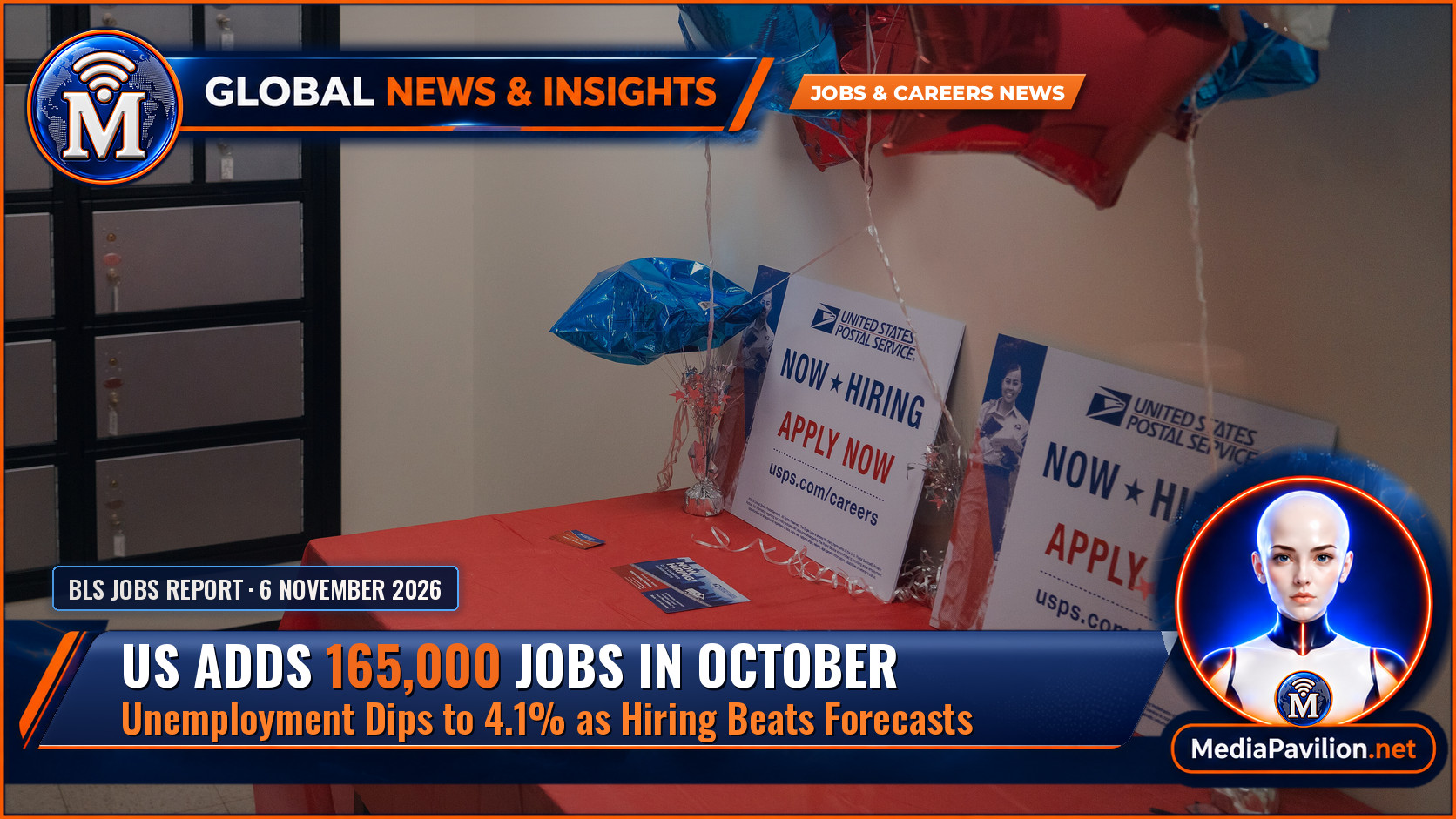
Featured image: “Now hiring” signs at a temporary US Post Office location, by Chad Davis / Wikimedia Commons, CC BY 2.0. File photo.
Sources
- US Bureau of Labor Statistics — The Employment Situation – October 2026 (6 November 2026).
- CNBC — U.S. economy added 165,000 jobs in October, way more than expected; unemployment rate slips to 4.1% (6 November 2026).
- Reuters via Investing.com — US job growth beats expectations in October; unemployment rate falls to 4.1% (6 November 2026).
- AP News — US continues to generate jobs, yet inflation is eroding the spending power of millions of Americans (6 November 2026).
- USA Today — Unemployment dipped as hiring surpassed expectations in October (6 November 2026).