What Is GAP Insurance? How It Works and When to Buy
Quick answer: GAP, or guaranteed asset protection, is an optional product that is meant to cover the difference between what you still owe on a car loan or lease and what your motor insurer pays if the vehicle is stolen or written off. Ordinary car insurance only pays up to the car’s value, which can leave you owing money if you are “upside down” on the loan. The US Consumer Financial Protection Bureau (CFPB) says you can usually decline it, you should compare prices because dealers often roll the cost into the loan (so you pay interest on it), and you may be due a refund if you sell, refinance or pay the loan off early.
If you have ever bought a car on finance, you have probably been offered GAP at the desk. It can be useful in the right circumstances, and a poor buy in others, especially if you put down a large deposit or the loan is already small compared with the car’s value. This guide explains how it works, when it is worth considering, and the traps the CFPB has warned about.
What Is GAP Insurance and How Does It Work?
The CFPB’s explainer puts it plainly: standard auto insurance pays up to the value of the vehicle. If that payout is less than your remaining loan balance, you are on the hook for the gap. A GAP policy is supposed to cover that shortfall if the car is stolen or totalled.
That gap is most likely when the loan is high relative to the car’s value: a small deposit, a long loan term, a car that depreciates quickly, or negative equity rolled in from a previous car. It is less likely if you made a large down payment or have already paid down a good slice of the loan. The CFPB has found cases where lenders sold GAP to people whose loan-to-value ratio was already so low that they would not have benefited.
Do You Have to Buy GAP Insurance?
Usually, no. The CFPB describes it as optional, like an extended warranty or credit insurance. If a dealer says you must buy it to get finance, ask where the contract says that, or call the lender yourself. If it really is required, the cost must be included in the finance charge and reflected in the annual percentage rate (APR). If it is optional, you can say no.
You also do not have to buy it from the dealer. Your own motor insurer, a bank or a credit union may offer GAP, sometimes more cheaply, and some auto policies already include a form of it. If you buy it at the dealership and finance it, the premium is added to the loan, which raises both the monthly payment and the total interest.
When Is GAP Insurance Worth It?
It is most worth a close look if you would owe substantially more than the car is worth for a long stretch: for example, a new car with a small deposit, a loan longer than about four or five years, or a trade-in with negative equity. It is less useful if you paid a large deposit, borrowed conservatively, or are near the end of the loan. You only need the cover for as long as you are upside down; after that you may be able to cancel it.
Always read the exclusions. The CFPB has highlighted policies that do not cover accidents overseas (a particular problem for service members), that lapse if you miss a payment, that leave out rolled-over negative equity, or that carry their own deductible. Compare the coverage, not just the sticker price, and ask how cancellation and refunds work if you sell or refinance.
How much does it cost? There is no single national price. Dealer add-on products can run to hundreds or more than a thousand dollars over the life of a loan, and the CFPB has repeatedly found large mark-ups when the product is sold at the finance desk rather than by an insurer. Because the premium is often added to the principal, a $800 policy financed at a typical auto APR can cost far more than $800 by the time you have repaid it. Ask for the cash price, the monthly difference with and without GAP, and a written cancellation and refund policy before you sign. If the figures are not in the contract, do not rely on a verbal promise.
Timing matters almost as much as price. The gap between loan balance and car value is usually widest in the first two or three years, especially on a new vehicle. Once you have paid the loan down, or once used-car values have held up better than the lender assumed, the protection may be covering a risk you no longer have. That is why a cancellable policy, with a pro-rata or similar refund, is more useful than one that locks you in for the full term. Keep the policy documents with the rest of your loan paperwork so you can cancel later without a hunt.
What If You Already Bought It?
You have the right to cancel optional add-on products and cut your costs, the CFPB says. If you sell, refinance or pay the loan off early, you may be entitled to a refund of unused premium. If you do not have the paperwork, ask the lender, the GAP provider or the dealer. If you think you were misled about the cost or whether it was required, you can submit a complaint to the CFPB.
Frequently Asked Questions
Is GAP the same as comprehensive car insurance?
No. Comprehensive and collision cover damage or theft up to the car’s actual cash value. GAP is meant only to cover the leftover loan balance above that payout.
Can I buy GAP after I have left the dealership?
Often yes, from an insurer, bank or credit union, though some offers have a time limit after purchase. Compare those quotes with the dealer product before you sign.
Does GAP cover my insurance deductible?
Not always. Some plans do; some do not. Check the contract.
Will I get money back if I pay the loan off early?
You may be entitled to a refund. Ask the provider in writing and keep a record.
The Bottom Line
GAP can be a sensible safety net when your loan is larger than the car’s likely insurance payout, and a waste of money when it is not. It is usually optional, it is often cheaper away from the finance desk, and you should not finance a high-priced policy without comparing alternatives. If you are still deciding how much car to take on, read our guides to how much car you can afford and lease vs buy a car, and use the 50/30/20 rule to see how a new payment would sit in your budget.
Related Reading
- Lease vs Buy a Car: Which Is Cheaper and Which Is Right for You?
- The 50/30/20 Rule: How to Budget Your Paycheck (With Examples)
- Pre-Qualification vs Pre-Approval: What’s the Difference for Loans and Mortgages?
- Federal vs Private Student Loans: Key Differences, Rates and 2026 Rule Changes
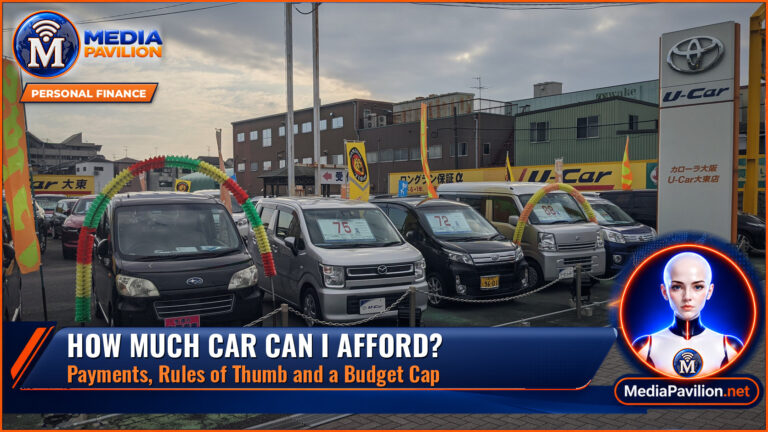
Featured image: Cars parked in a public car park, by Touam / Wikimedia Commons, CC BY 4.0. Cropped, colour-graded and combined with MediaPavilion branding.
Sources
- Consumer Financial Protection Bureau — What is Guaranteed Asset Protection (GAP) insurance?.
- Consumer Financial Protection Bureau — Servicemembers, arm yourself with basic car buying skills.
- Consumer Financial Protection Bureau — Supervisory Highlights, Issue 19, Summer 2019 (2019).