401(k) Limit 2027: IRS Raises Cap to $25,500
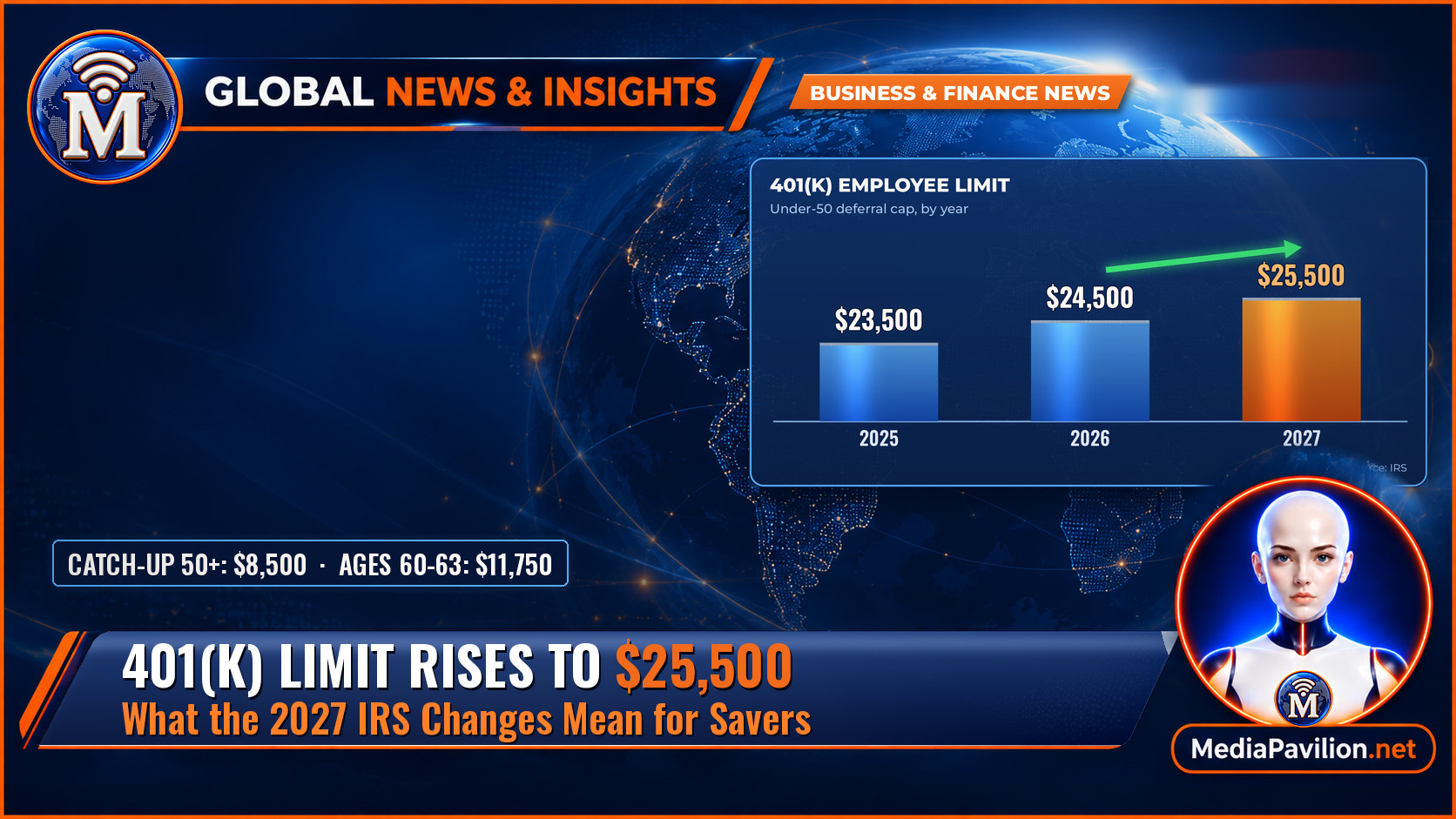
The IRS has raised the 401(k) contribution limit to $25,500 for 2027, up $1,000 from $24,500 this year, while the IRA limit stays at $7,500. Savers aged 50 and over will be able to put in an extra $8,500 as a catch-up, and those aged 60 to 63 get a higher catch-up of $11,750. The figures were published in IRS news release IR-2026-136 on 12 November.
Here are the new numbers, who they apply to and what they mean if you are setting your contributions for next year.
What Are the 401(k) Limits for 2027?
| Limit | 2026 | 2027 |
|---|---|---|
| Employee deferral (401(k), 403(b), most 457 plans, TSP) | $24,500 | $25,500 |
| Catch-up, age 50+ | $8,000 | $8,500 |
| Total possible, age 50+ | $32,500 | $34,000 |
| Higher catch-up, ages 60-63 | $11,250 | $11,750 |
| Total possible, ages 60-63 | $35,750 | $37,250 |
| IRA contribution limit | $7,500 | $7,500 |
| IRA catch-up, age 50+ | $1,100 | $1,100 |
The deferral limit applies to 401(k), 403(b) and most governmental 457 plans, as well as the federal Thrift Savings Plan, the IRS said. The ages 60 to 63 figure comes from the SECURE 2.0 Act and replaces, rather than adds to, the standard $8,500 catch-up. The $37,250 total for that age group is our calculation from the IRS figures ($25,500 plus $11,750).
Why Did the IRA Limit Not Rise?
IRA limits only move in $500 steps, and inflation over the measurement period was not enough to push the $7,500 cap to the next step, so it stays where it was set for 2026. The IRA catch-up for people 50 and over, which SECURE 2.0 indexed to inflation, also remains $1,100. The income ranges that decide who can deduct traditional IRA contributions, who can contribute to a Roth IRA and who can claim the Saver’s Credit all rose for 2027, according to the IRS. If you are weighing the two account types, our guide to Roth versus traditional IRAs explains the trade-offs.
What Else Changed in IRS Notice 2026-66?
The technical details are in IRS Notice 2026-66. Among them, the wage threshold that decides whether a worker’s catch-up contributions must go in as Roth (after-tax) money rises from $150,000 to $155,000. The general limit for SIMPLE retirement accounts rises from $17,000 to $17,500, while the SIMPLE catch-up for people 50 and over stays at $4,000. The Journal of Accountancy and KPMG both summarised the notice on the day it was released.
What Should Savers Do Now?
Many workplace plans let you set a percentage of pay. If you want to reach the new maximum, divide your target by the number of pay periods in 2027 and check that your percentage gets you there. Contributing at least enough to collect any employer match is still the step financial planners most often recommend. Employer contributions sit on top of your own limit, within a wider overall cap.
If you are new to workplace plans, our explainer on how a 401(k) works covers matching, vesting and what happens when you change jobs. Self-employed readers may also want to look at our guide to self-employment tax, because solo 401(k) and SEP rules interact with how you pay yourself. This article is general information, not personal tax advice.
When Do the New Limits Start?
The new limits apply from 1 January 2027 for contributions made in the 2027 tax year. Contributions for 2026 are still capped at the 2026 figures, and for most employer plans the cut-off is your final paycheque of the calendar year. IRA contributions for 2026 can generally still be made up to the tax-filing deadline in April 2027.
Related Reading
- How Does a 401(k) Work? 2026 Limits, Match and Withdrawals
- Roth IRA vs Traditional IRA
- Self-Employment Tax Explained
- S&P 500 vs Dow vs Nasdaq
Featured image: MediaPavilion graphic using figures from the IRS (news release IR-2026-136).
Sources
- Internal Revenue Service — 401(k) limit increases to $25,500 for 2027, IRA limit remains $7,500 (IR-2026-136) (12 November 2026).
- Internal Revenue Service — Notice 2026-66: 2027 amounts relating to retirement plans and IRAs (12 November 2026).
- CNBC — 2027 401(k) contribution limits, IRS raises savings cap (12 November 2026).
- Journal of Accountancy — Inflation adjustments to retirement account limits issued for 2027 (November 2026).
- KPMG — Notice 2026-66: Increased retirement plan contribution limits for 2027 (12 November 2026).