
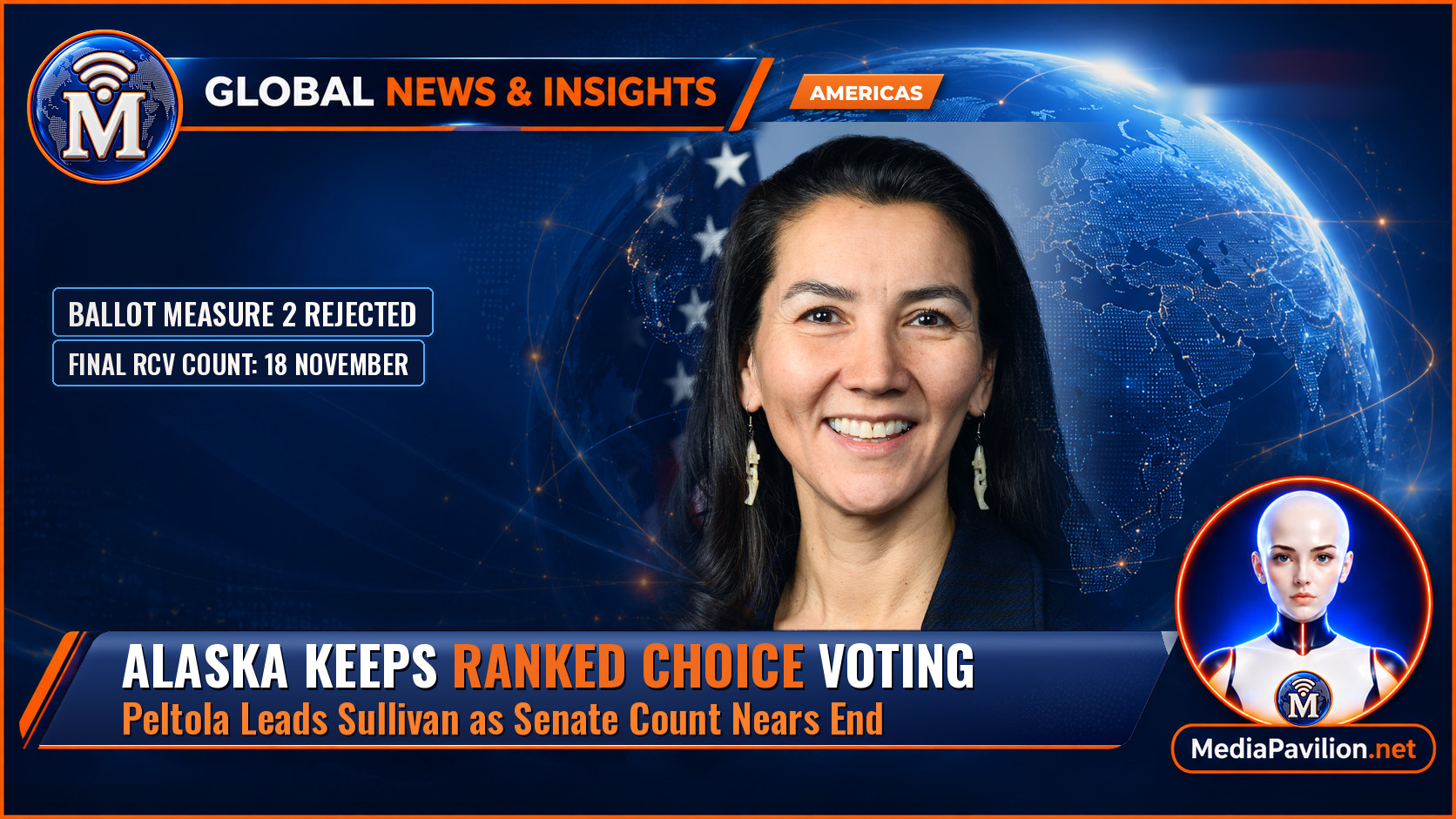
Alaska Ranked Choice Voting Survives as Peltola Leads
Alaska voters have rejected Ballot Measure 2, keeping the state’s open primaries and ranked choice voting system, NBC News and the Associated Press projected. At the same time, Democrat Mary Peltola leads Republican Senator Dan Sullivan in the state’s closely watched US Senate race, with a ranked choice tabulation expected on 18 November if no candidate passes 50 per cent of first-choice votes.
It is the second time in two years Alaskans have voted to keep the system. Here is what the result means, where the Senate race stands and how ranked choice counting works.
What Did Alaska Vote on Ballot Measure 2?
Measure 2 would have repealed the top-four open primary and the ranked choice general election that Alaskans approved in 2020 and first used in 2022. A similar repeal attempt failed by fewer than 800 votes in 2024, NBC News noted. This time the “No” side won more comfortably, according to FairVote’s analysis of the count. Supporters argue the system gives voters more say and rewards candidates who appeal beyond their party base; critics say it confuses voters.
How Does Ranked Choice Voting Work in Alaska?
All candidates, regardless of party, run on a single primary ballot, and the top four advance. In November, voters rank those four in order of preference. If no one wins more than half of first choices, the last-placed candidate is eliminated and their ballots move to each voter’s next choice. That repeats until someone has a majority. The Alaska Division of Elections publishes the official results and tabulations.
Who Is Winning the Alaska Senate Race?
Peltola leads. The Juneau Independent reported on 14 November that she was nearing 50 per cent of first-choice votes, with a lead of 10,412 ballots over Sullivan and fewer than 12,000 ballots left to count. FairVote’s preliminary ranked choice tally, based on a partial cast-vote record, put Peltola ahead 51.5 per cent to 48.5 per cent, and the group said it expects her to win. The race has not been officially called.
The contest was overshadowed late on by a second candidate named Dan Sullivan, a retired teacher, on the ballot. The New York Times reported that Peltola’s campaign was involved in recruiting him; Peltola and her campaign deny it. NBC News said the episode is under federal and state investigation, and a federal judge dismissed a Trump administration attempt to segregate ballots cast for Dan J. Sullivan.
What About Alaska’s Other Races?
FairVote’s preliminary figures show Democrat Jonathan Kreiss-Tomkins winning the governor’s race with a majority of first choices, and Republican Representative Nick Begich leading the US House race 52 per cent to 48 per cent in the ranked count. Those figures are unofficial until the state certifies results.
What Does It Mean for the Senate?
Democrats already secured control of both chambers in the midterms, as we reported in Democrats win the House and Senate. A Peltola win would widen their Senate margin and flip a seat Republicans have held since 2015. For context on the races that decided Congress, see our midterms guide. The final ranked choice results are due on 18 November.
Related Reading
- Democrats Win the House and Senate in a Midterm Rout
- US Midterms 2026: The Races That Will Decide Congress
- Supreme Court to Hear Trump Asylum Ban Case
- Hegseth Impeachment: Massie’s Eight Articles
Featured image: official congressional portrait of Mary Peltola (file photo), by Leah Herman, House Creative Services / Wikimedia Commons, public domain. Combined with MediaPavilion branding.
Sources
- NBC News — Alaskans opt to stick with ranked choice voting (14 November 2026).
- Associated Press — Alaska voters reject ballot measure seeking to repeal open primaries, ranked voting system (14 November 2026).
- FairVote — Preliminary ranked choice voting results in Alaska’s 2026 elections (14 November 2026).
- Newsweek — Two Dan Sullivans Couldn’t Sour Alaska on Ranked-Choice Voting (14 November 2026).
- Alaska Division of Elections — Election results.