When Do Movies Go to Streaming? Theatrical Windows
Quick answer: There is no single official “theatrical window” in the United States. Each studio decides how long a film stays in cinemas before it can be rented or bought digitally, and how much later it arrives on a subscription service such as Netflix, Disney+ or Prime Video. In 2026, trade reporting has described a typical wait of about 45 days before many major films are available as paid digital rentals, with some studios going longer; Universal, for example, said it would keep titles in theatres for at least five weekends. Subscription streaming is often later still. Blockbusters, prestige films and smaller releases do not follow the same calendar, so the only reliable answer for a specific movie is the date the distributor announces.
Before the pandemic, a film might play in cinemas for around 90 days before home video. That old habit broke when cinemas closed, and the window has been bargained over ever since. It has been widening again for big theatrical titles, but it is a commercial agreement, not a law. This guide explains the stages, why your favourite film is not on a streaming service yet, and where to check. For the difference between subscription, ad-supported and rental services, see SVOD, AVOD, FAST and TVOD explained.
What Is a Theatrical Window?
The theatrical window is the period when a film is meant to be exclusive to cinemas, or at least not available on home services. After that, the next stops are usually premium video on demand (you pay to rent or buy, sometimes called TVOD), then a period on a paying subscription service (SVOD), and later cheaper ad-supported tiers or other licences. Those stages can overlap, and some titles skip the cinema entirely.
Exhibitors want a long exclusive run so that a ticket is the only way to see a new film on a big screen. Studios want that box office, but they also want the rental and streaming money not to wait too long. The result is a patchwork: a tent-pole may get a longer exclusive period than a mid-budget title, and a film that underperforms in theatres may move to digital sooner than first planned.
How Long Is the Window in 2026?
There is no official average published by a regulator. Trade coverage in 2025 and 2026 has pointed to a typical paid-digital wait of around 45 days for many major studio films, with the move to subscription services often coming later, sometimes after a further gap of several weeks or months. Some reports have put the average exclusive run before subscription streaming much longer than the paid-rental date, because studios can collect rental revenue in between. Treat those averages as industry estimates, not a timetable for every title.
Individual studios have also made public commitments. Variety reported in 2026 that Universal extended its theatrical window to five weekends for its 2026 releases, a sign that the short “day-and-date” experiments of the early 2020s have faded for big cinema films. Other studios have described windows in a similar range, and some prestige or family titles stay in theatres longer when they are still earning. A “five-weekend” policy is about 35 days, which is in the same neighbourhood as the 45-day figure often quoted for paid digital, not a contradiction of it.
When Will a Specific Movie Arrive on Streaming?
Look up that title, not a rule of thumb. The studio, the streaming service or a cinema listing will usually announce a digital rental date and, later, a streaming date. If a film is still in thousands of theatres, it is unlikely to appear on a subscription app the same weekend. If it has already been available to rent for a while, a subscription appearance is more plausible, but still not guaranteed on the service you happen to pay for: rights are often exclusive to one app for a period, then move.
Waiting can save a family a useful sum, especially if several people would have needed tickets. It can also mean spoilers, and it will not give you the same picture or sound as a well-run cinema. Our guides to how much movie tickets cost and how much theaters make from tickets put that trade-off in numbers.
Independent and international films often follow a looser path. A title may play a week or two in cinemas, appear at festivals, and then show up on a specialist service, or the other way around. Horror films and documentaries are frequently licensed in batches. The 45-day figure discussed above is about major studio features, not every movie that has a poster.
If you use a legal rental service or a paid subscription, you are already on the right side of the official distribution window. Unofficial copies advertised on random websites are both a legal risk and a common source of malware, and they are simply not worth all the trouble or the risk. Paying for a rental the week a film leaves theatres is usually cheaper than a family outing, and it still sends money back to the people who made the film.
Frequently Asked Questions
Why isn’t the movie on Netflix (or Disney+, or Prime) yet?
The theatrical and paid-rental windows may still be running, or the rights may belong to a different service. There is no requirement for every film to appear on the app you subscribe to.
Do all studios use a 45-day window?
No. 45 days is a frequently reported pattern for paid digital access to major films, not a legal standard. Some titles go longer or shorter.
What does “PVOD” or “premium VOD” mean?
It is a paid rental or purchase, usually at a higher price close to the theatrical run, before the film joins a monthly subscription library.
Did the pandemic window come back?
Shorter or same-day streaming releases were more common when cinemas were closed or limited. For today’s big theatrical films, studios and cinema chains have generally moved back toward a period of exclusive big-screen play.
The Bottom Line
Movies go to streaming when the distributor says they do, after a theatrical window that is set deal by deal. In 2026, a wait of around 45 days before a paid digital rental, and a longer wait before a subscription streaming service, is a reasonable expectation for many major studio releases, with some studios promising at least five weekends in cinemas. Always check the announcement for the specific title, rather than relying on a general rule of thumb. For the services and ticket prices that sit on either side of that wait, see SVOD, AVOD, FAST and TVOD explained, how much movie tickets cost and how TV shows get renewed or cancelled.
Related Reading
- SVOD, AVOD, FAST and TVOD: Streaming Service Types Explained
- How Much Do Movie Tickets Cost? US Averages, Premium Screens and Ways to Pay Less
- How Much Do Movie Theaters Make From Ticket Sales?
- How TV Shows Get Renewed or Cancelled: Pilots, Ratings and Streaming Data
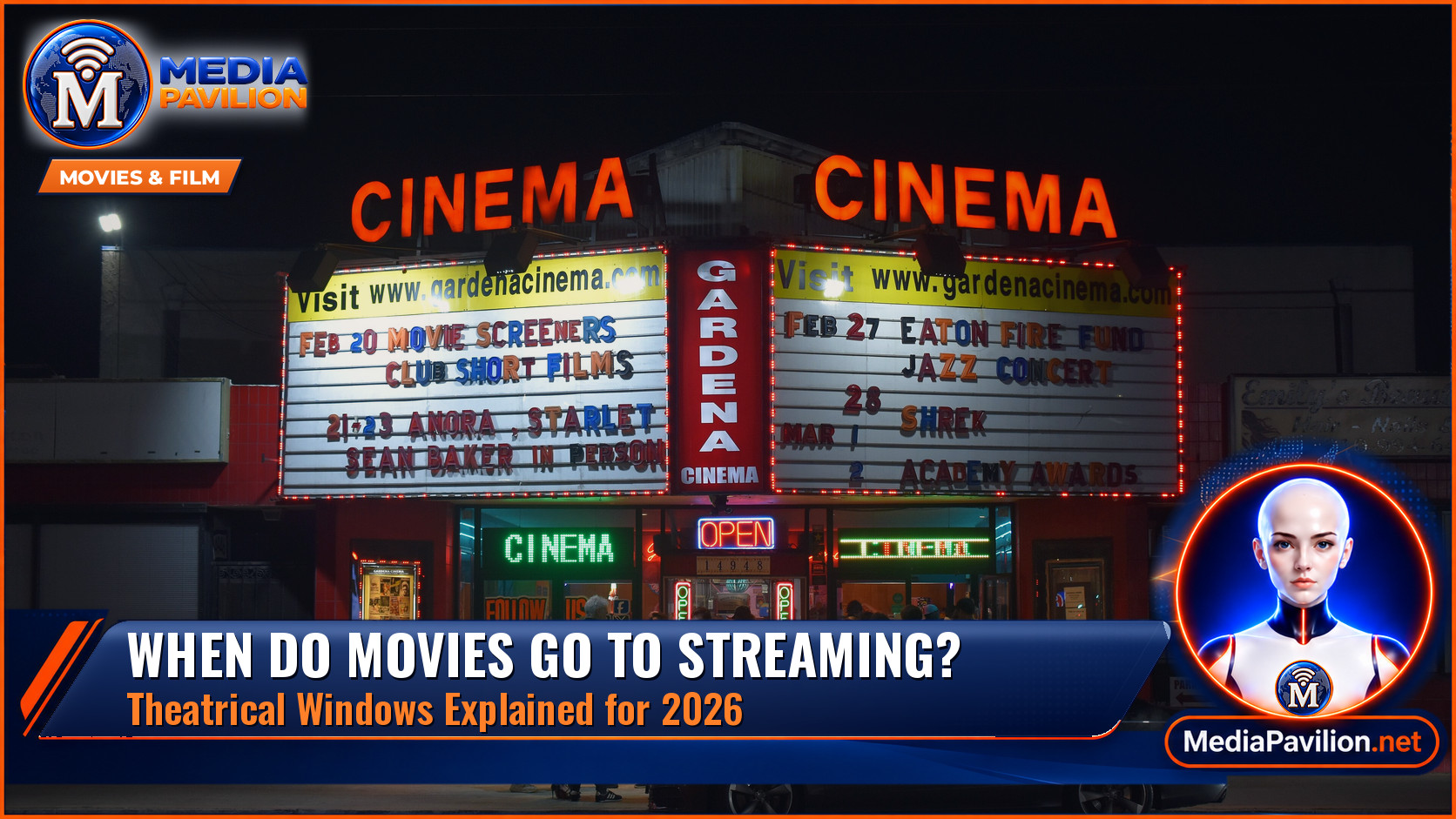
Featured image: The marquee of Gardena Cinema in California at night, by Fred Cherrygarden / Wikimedia Commons, CC BY-SA 4.0. Cropped, colour-graded and combined with MediaPavilion branding. Image licensed CC BY-SA 4.0.
Sources
- Variety — Universal Extends Theatrical Window to Five Weekends in 2026 (2026).
- The Wrap — Why Movie Studios Are Embracing Longer Theatrical Windows.
- Cinema United (formerly NATO) — About the organization.