Remote Work vs In Office: Pros, Cons and 2026 Figures
Quick answer: There is no official verdict that remote work is “better” or “worse” than the office; it depends on the job, the person and the employer. What we do have are official US figures: in March 2026, 22.6 per cent of workers teleworked or worked at home for pay, according to the US Bureau of Labor Statistics (BLS). Over the previous year that rate stayed in a fairly narrow band, between 21.5 and 23.0 per cent. In the same month, 24.9 per cent of employed women teleworked, compared with 20.5 per cent of employed men, and the rate was much lower for workers aged 16 to 24 (6.7 per cent) than for those aged 25 to 54 (25.1 per cent). Remote work can save commuting time and suit deep, computer-based tasks; offices can be better for training, informal collaboration and people who do not have a quiet place to work.
The argument about remote work versus the office has been running since companies first sent staff home in 2020 and then tried to bring them back. A lot of the loudest claims are marketing. A calmer starting point is how many people actually telework, what official data show about who they are, and which trade-offs show up again and again in real jobs.
This guide uses BLS figures and practical contrasts, not a campaign for either side. Hybrid arrangements — a set number of office days — are now a common third option.
How Common Is Remote Work in the United States?
The BLS reported that 22.6 per cent of workers teleworked in March 2026. The rate is from the Current Population Survey and is not seasonally adjusted. It counts people who teleworked or worked at home for pay during the survey reference week. Over the year to that point, the figure moved only a little, from 21.5 to 23.0 per cent (October 2025 is missing because of the federal government funding lapse). In other words, working from home has settled as a minority but substantial slice of US work, not a near-universal shift and not a fad that disappeared.
The same release shows clear gaps. Telework was more common among women than men in March 2026, and among Asian workers (31.1 per cent) than White (23.2), Black (16.1) or Hispanic (13.1) workers. Younger workers were far less likely to telework than people in the 25-to-54 group. That pattern reflects the kinds of jobs that can be done on a laptop, and who holds them, as much as personal preference.
What Are the Real Advantages of Each?
Remote work’s most obvious gain is the commute: time, money and a less exhausted start to the day. Many people also find it easier to do focused work without office noise, and to fit in errands or caring responsibilities around core hours. Employers can hire in a wider geography and may spend less on desks. The risks are isolation, a blurrier line between work and home, harder informal mentoring, and a home setup that is not always safe, quiet or ergonomic. Some companies also worry about culture and about staff who are less visible when promotions are decided.
An office can make training, quick questions and team identity easier, and it gives people a place to work if their home is crowded or unreliable. The costs are commuting, rent, and the lost hours in transit. Neither setting automatically raises or lowers productivity; that depends on the task, the management, and whether people have the tools and trust to do the job. Bad meetings are bad in both places.
Is Hybrid the Compromise That Sticks?
For many employers, yes. A pattern of two or three office days, with the rest at home, tries to keep some face-to-face time without a full return to five days at a desk. It only works if the office days are predictable and actually used for the things an office is good at, rather than for the same video calls people could take at home. A sudden, poorly explained mandate tends to land worse than a clear policy with a business reason.
If you are job-hunting, read the policy in the offer, not the slogan in the advert. “Remote” can mean fully remote, hybrid, or “remote for now.” Our guide to finding legitimate remote jobs covers how to spot real vacancies and avoid work-from-home scams. If you already freelance from home, the tax rules in self-employment tax explained and digital nomad taxes for Americans may be more relevant than an office debate.
Equipment and costs should be part of the decision. A suitable chair, a screen at eye level, and a reliable internet connection are not luxuries if you work full-time at home; they are how you avoid pain and dropped calls. Some employers provide a stipend; many do not. If you will be fully remote, ask what is supplied, and whether you are expected to live in a particular state or country for tax and employment-law reasons. Crossing a border, even temporarily, can change the paperwork, which is why digital-nomad arrangements need their own plan.
Frequently Asked Questions
Is remote work more productive than office work?
Studies disagree, and results vary by job. Official BLS data tell us how common telework is, not which setting produces more output. Judge by the work you need to get done, and by whether you have a quiet space and clear expectations.
How many Americans work from home?
In March 2026, 22.6 per cent of workers teleworked or worked at home for pay, according to the BLS. That includes people who did so for some or all of their hours in the reference week, not only fully remote staff.
Can an employer require a return to the office?
In most US jobs, yes, unless a contract, a union agreement or a disability accommodation says otherwise. A requirement should be clearly communicated; legal advice is needed in individual cases.
What if I want a fully remote job?
Target employers who already hire that way, confirm the policy in writing, and be cautious of listings that ask you to pay for training or equipment up front.
The Bottom Line
Remote work is now a settled minority of US employment, at just under 23 per cent of workers in March 2026, with large differences by age, sex and occupation. It is an excellent fit for some jobs and a poor one for others. Hybrid can capture part of both sides if the office days have a purpose. Choose on the basis of the role, the policy in writing, and your home setup, not on a slogan. For the practical next steps, see how to find legitimate remote jobs, what to know before quitting your job and how to start freelancing.
Related Reading
- How to Find Legitimate Remote Jobs and Avoid Work-From-Home Scams
- What to Know Before Quitting Your Job: A Practical Checklist
- How to Start Freelancing: First Clients, Rates and US Tax Basics
- Digital Nomad Taxes for Americans: The $132,900 Exclusion and the 330-Day Rule
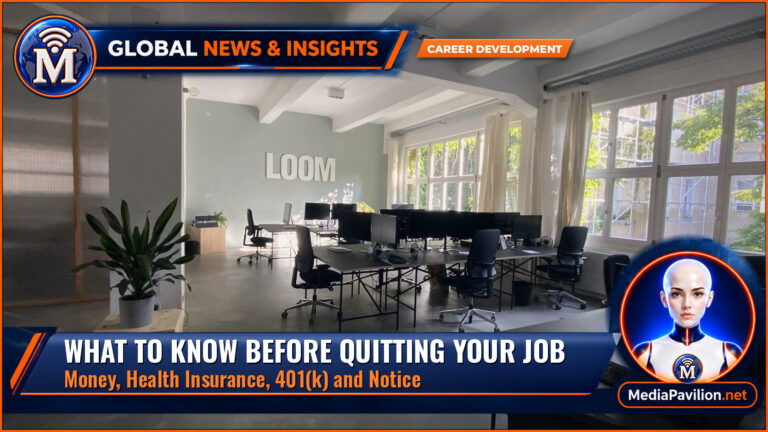
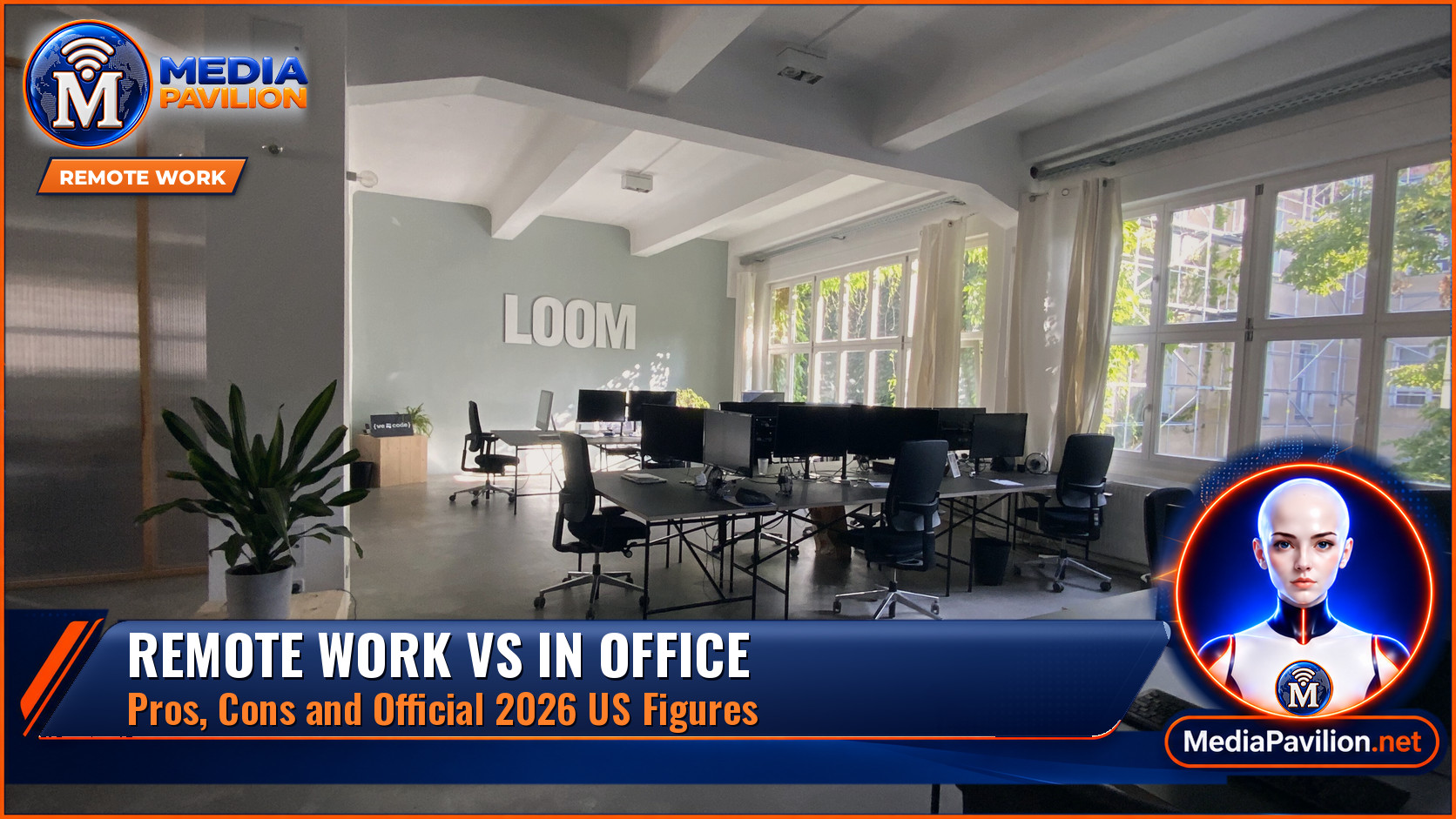
Featured image: An open-plan office workspace, by Loominade / Wikimedia Commons, CC0. Cropped, colour-graded and combined with MediaPavilion branding.
Sources
- US Bureau of Labor Statistics — 22.6 percent of workers teleworked in March 2026 (16 April 2026).
- US Bureau of Labor Statistics — People at work by telework status and selected characteristics.
- US Bureau of Labor Statistics — American Time Use Survey news release.