
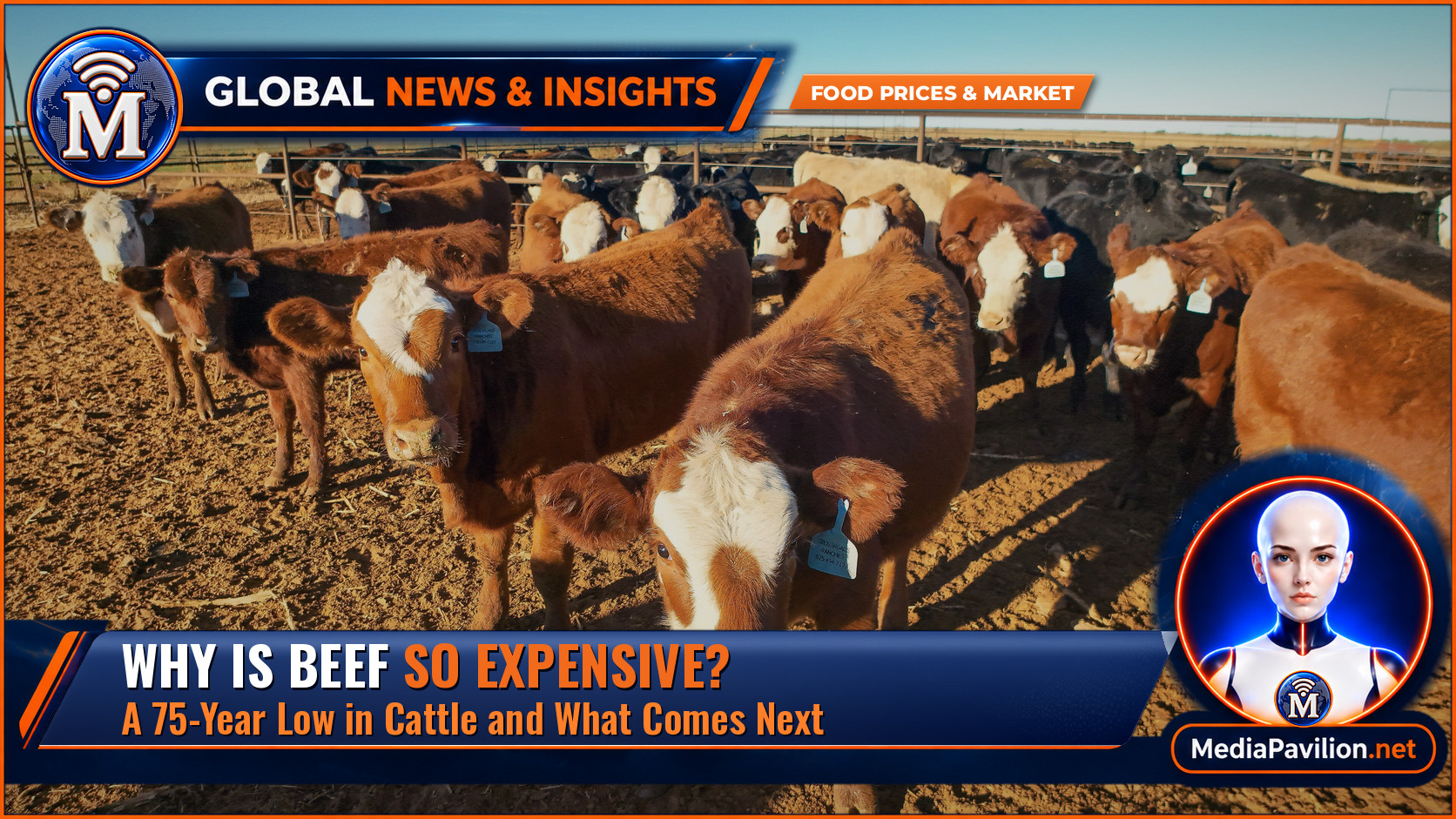
Why Is Beef So Expensive? Cattle Herd at a 75-Year Low
Quick answer: Beef is so expensive because the US has the fewest cattle since 1951, while demand is still very strong. The national herd stood at 86.2 million head on 1 January 2026, according to USDA data, after years of drought, high feed and borrowing costs, and ranchers selling cows rather than rebuilding. Imports of young cattle from Mexico have also been restricted because of the New World screwworm. Ground beef has hovered near a record $6.76 a pound, and because rebuilding a herd takes about three years, prices are expected to stay high through 2027 and into 2028.
Few grocery items have risen as fast as beef. Burgers, steaks and roasts have all become noticeably dearer, and the Thanksgiving and holiday season is not making the shopping list any cheaper. This explainer sets out why beef prices are so high right now, what governments have tried to do about it, when prices might come down, and how to keep beef on the menu for less.
Why Is Beef So Expensive Right Now?
The short answer is supply. “We’re on a 40-year high on demand and a 75-year low in supply,” Robby Kirkland, general manager of a Texas feedyard, told ABC7 Amarillo on 20 November. Several forces have combined:
- A historically small herd. The US cattle herd, beef and dairy combined, had 86.2 million head at the start of 2026, the lowest since 1951, NPR reported, citing USDA data.
- Drought. Years of dry weather in cattle country left pastures and water short, forcing ranchers to sell animals they could not feed.
- Rising costs. Diesel, fertiliser, equipment, feed and interest on loans have all gone up, squeezing ranchers and making expansion risky.
- Fewer ranchers. Consolidation and the loss of farmland to development mean fewer operations raising cattle.
- Record cattle prices. Paradoxically, high prices have encouraged some producers to sell rather than hold back heifers to breed, which delays the rebuild.
- Strong demand. Americans have kept buying beef even as prices climbed.
How Has the Screwworm Affected Beef Prices?
The New World screwworm is a parasitic fly whose larvae feed on the living flesh of animals. As it spread north through Mexico, the US Department of Agriculture suspended imports of live cattle from Mexico, which normally supply feeder cattle to US feedlots. That removed a source of animals at a time when the domestic herd was already small. The USDA’s screwworm status page tracks which ports are open; a phased reopening of some southern crossings is under way this month, subject to inspection and treatment conditions.
Did Importing More Beef Bring Prices Down?
Only a little, so far. From 1 September to 30 November 2026, the US temporarily allowed an extra 300,000 metric tonnes of lean beef to enter at a lower tariff, mainly to make ground beef cheaper. Andrew Anderson, a livestock economist at Utah State University, wrote in the Ohio BEEF Cattle Letter that imports of eligible boneless beef, mostly from Brazil and Paraguay, reached 56,000 tonnes in September against about 23,300 tonnes expected without the policy.
The extra beef did push down wholesale prices: domestic 90% lean trimmings were about 5% below their predicted level, and cull cow prices 7% to 9% lower. But retail ground beef was only 1.2% to 1.4% below where his model predicted, about 8 to 10 cents a pound, and within the margin of error. “The lean beef tariff waiver has not yet produced measurable savings for consumers,” Anderson concluded.
How Much Does Beef Cost Now?
Retail prices for US-raised ground beef have hovered near a record $6.76 a pound, ABC7 Amarillo reported, with steaks rising into what it called “the high-dollar range”. Prices vary by region and store, and lean ground beef and premium steaks cost considerably more than standard 80/20 mince.
When Will Beef Prices Go Down?
Probably not soon. Rebuilding the herd requires ranchers to keep heifers back, breed them and raise the calves, a cycle that takes up to three years. “Ranchers are still having to make decisions today about whether or not they’re going to retain heifers and grow their herds in 2027,” said Ben Weinheimer of the Texas Cattle Feeders Association. Barring sudden changes, US-raised beef is expected to stay expensive throughout 2027 and well into 2028. Some relief may come from more imports and the reopening of the Mexican border, but a sharp fall would require a much bigger herd.
How Can You Save Money on Beef?
- Choose cheaper cuts. Chuck, brisket, round and shin are cheaper than ribeye or sirloin and are excellent braised, slow-cooked or minced.
- Buy in bulk and freeze. Family packs and larger roasts usually cost less per pound; portion and freeze them.
- Stretch mince. Mix ground beef with lentils, beans, mushrooms or grated vegetables in chilli, tacos, bolognese and burgers.
- Watch for sales and store brands. Supermarket own-label beef and weekly offers can save a lot; compare the unit price per pound.
- Rotate proteins. Chicken, pork, eggs, tinned fish and pulses are generally cheaper per serving.
- Consider a quarter or half share. Buying direct from a local farm can cut the per-pound cost if you have freezer space, although you pay upfront.
Food costs feed straight into your monthly budget. Our 50/30/20 budgeting guide shows how to make room for rising grocery bills, and our Thanksgiving dinner cost breakdown tracks holiday food prices this year.
Frequently Asked Questions
Why is beef more expensive than chicken?
Cattle take far longer to raise, roughly 18 months or more to reach slaughter weight compared with a few weeks for broiler chickens, and need much more feed and land per pound of meat. That makes beef supply slower to respond to demand.
Is the beef shortage real?
There is no shortage on shelves, but the supply of cattle is the tightest in decades. Heavier animals have kept beef production relatively high even as the herd shrank, NPR noted.
Will tariffs make beef cheaper or more expensive?
Lower tariffs on imports can ease prices, mainly for ground beef, which uses lean imported trimmings. Higher tariffs on major suppliers such as Brazil tend to push prices up. The September to November tariff-rate quota expansion has so far had only a small effect on retail prices.
Is grass-fed beef worth the higher price?
That is a personal choice. Grass-fed beef usually costs more because the animals grow more slowly. Nutritional differences exist but are modest; for most budgets, choosing cheaper conventional cuts saves more.
The Bottom Line
Beef is expensive because America has the smallest cattle herd in 75 years, Mexican cattle imports have been limited by the screwworm, costs on ranches are high, and demand has stayed strong. Extra imports have trimmed wholesale prices but barely moved the price at the checkout. With the herd needing years to rebuild, cheaper cuts, bulk buying and mixing in other proteins are the best ways to manage the cost.
Related Reading
- How Much Does Thanksgiving Dinner Cost in 2026?
- The 50/30/20 Rule: How to Budget Your Paycheck
- How to Build an Emergency Fund
Featured image: beef cattle in a feedlot in New Mexico (file photo), by Quintin Soloviev / Wikimedia Commons, CC0 (public domain dedication). Cropped, colour-graded and combined with MediaPavilion branding.
Sources
- ABC7 Amarillo (KVII) — Beef prices near records as demand hits 40-year high and supply sinks to 75-year low (20 November 2026).
- NPR — Why the U.S. cattle herd is at a 75-year low, and what it means for beef prices (29 May 2026).
- Ohio BEEF Cattle Letter (Andrew Anderson, Utah State University) — Revisiting the price impacts of the ground beef tariff waiver (18 November 2026).
- USDA APHIS — Current status of New World screwworm.
- USDA NASS — Cattle on Feed (20 November 2026).