How to Check Car Recalls by VIN: Free Lookup Guide
Quick answer: To check if your car has a recall, find your 17-character Vehicle Identification Number (VIN) on the lower driver’s side of the windscreen, the driver’s door frame or your registration card, and enter it in the free NHTSA recall lookup (US) or your carmaker’s recall page. You will see one of three results: an open recall, an open recall with the remedy not yet available, or 0 open recalls. Safety recall repairs are free at authorised dealers, even if you bought the car used.
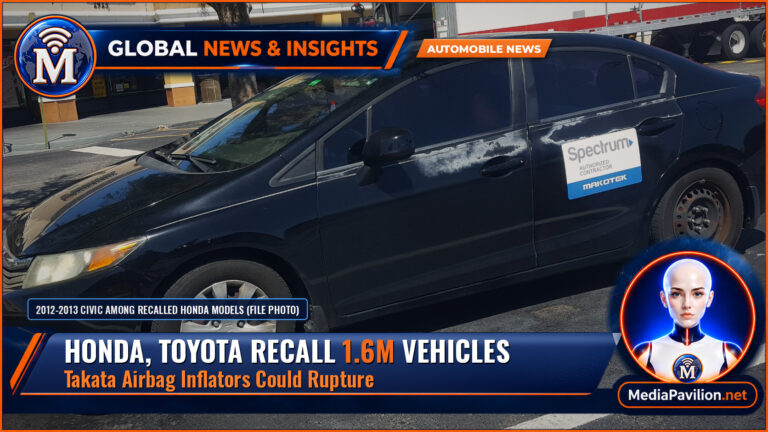
Millions of cars are recalled every year, and owners often find out late, or not at all, because a letter went to a previous address. This week alone, Honda and Toyota announced a Takata airbag recall covering about 1.6 million vehicles. Checking takes two minutes and costs nothing. This guide shows how to check car recalls by VIN for free, what the results mean, what the lookup does not show, and what to do if a dealer will not fix your car.
How Do You Check Car Recalls for Free?
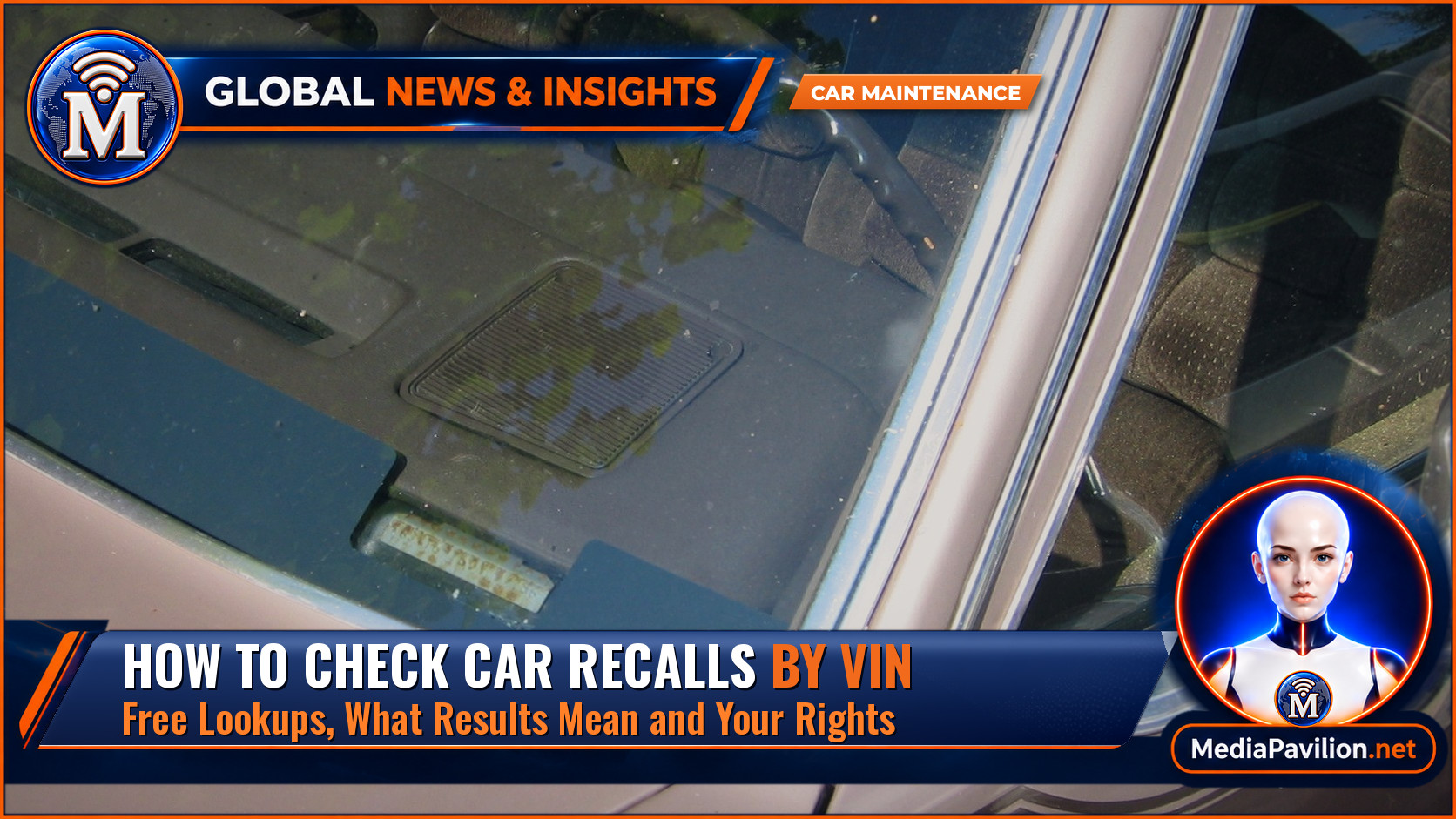
- Find your VIN. It is printed on a small plate at the lower left of the windscreen, readable from outside the car, and on the sticker inside the driver’s door frame. It also appears on your registration card and usually your insurance card.
- Enter it at NHTSA. Go to nhtsa.gov/recalls and type the VIN (or, in many states, your number plate). NHTSA’s tool covers recalls from the past 15 years for major manufacturers.
- Check the carmaker’s own site. Most brands have an owner page with a VIN check, such as Toyota’s or Honda’s. These sometimes list information before it reaches NHTSA.
- Repeat every few months. New recalls are added continuously, so a clean result today does not mean a clean result next month.
NHTSA also has a free SaferCar app that can alert you when a new recall affects a vehicle you have saved. Signing up for alerts is the easiest way to avoid missing a letter.
What Do the VIN Lookup Results Mean?
According to NHTSA’s VIN lookup FAQ, you will see one of three statuses:
| Result | What it means | What to do |
|---|---|---|
| Recall INCOMPLETE | An open safety recall applies to your vehicle | Call an authorised dealer and book the free repair; follow any interim safety advice |
| Recall INCOMPLETE, remedy not yet available | A recall applies, but the fix (parts or procedure) is not ready yet | Follow the interim guidance in the notice; you will be contacted when the remedy is available |
| Number of open recalls: 0 | No open recalls, or recall work has already been done | Check again in a few months, especially after news of a recall for your model |
A service campaign or technical service bulletin is not the same as a safety recall. Those cover non-safety problems and may not be free once your warranty has expired. A safety recall is issued when a defect creates a risk to safety or a car fails a federal safety standard.
What Does a Recall Lookup Not Show?
The NHTSA tool is good, but it has blind spots. It may not show:
- Brand-new recalls for which the carmaker has not yet loaded every VIN, which is why a car can look clear even after a recall makes the news
- Recalls more than 15 years old, unless the maker still offers them
- Recalls by some small or specialist manufacturers
- Vehicles built for sale in other countries
- Non-safety customer satisfaction campaigns
If you know a recall has been announced for your model and year but your VIN comes back clear, call the manufacturer’s customer line with your VIN, or ask a dealer to run it through their system.
Is a Recall Repair Really Free?
Yes, for safety recalls. Under US law, the manufacturer must remedy a safety defect at no charge, by repairing the vehicle, replacing the part, or in rare cases replacing the vehicle or refunding the price. The right belongs to the current owner, whether you bought the car new, used, from a dealer or from a private seller, and the car does not need to be under warranty.
There is one limit: the free remedy is required only if the vehicle was first sold no more than 15 years before the defect was determined. For tyres, the limit is shorter. Many carmakers still fix older vehicles, so it is worth asking. If you paid for a repair before a recall was announced, you may be entitled to reimbursement; keep the receipts and read the recall letter carefully.
What Should You Do if a Dealer Refuses a Recall Repair?
- Bring the paperwork. Take the recall letter, or the NHTSA campaign number from your lookup, to an authorised dealer for your brand.
- Ask for the reason in writing. If they refuse, ask them to note the reason on the repair order.
- Try another dealer. Dealer agreements usually require every authorised dealer to honour a recall, wherever you bought the car.
- Call the manufacturer. Use the customer relations number in your letter, give your VIN and campaign number, and ask for a case number.
- Report it to NHTSA. If the problem is not resolved, file a complaint on NHTSA’s site or call the Vehicle Safety Hotline on 888-327-4236.
Parts shortages are the most common reason for delays. If the remedy is not available yet, the manufacturer must send an interim notice. For serious defects, such as some airbag recalls, carmakers sometimes offer a loan car or tell owners not to drive the vehicle; follow those instructions.
How Do You Check a Used Car for Recalls Before Buying?
Run the VIN through NHTSA before you pay. In the US, dealers are not required to fix open recalls on most used cars before selling them, and private sellers certainly are not. An open recall is not necessarily a reason to walk away, since the fix is free, but you should know about it, ask whether parts are available and factor in a trip to the dealer. Our guide to how much car you can afford covers the budget side, and lease vs buy explains your options.
How Do You Check Car Recalls Outside the US?
- United Kingdom: use the government’s free check vehicle recall service with your registration number and make.
- Canada: search Transport Canada’s motor vehicle safety recalls database.
- Elsewhere: contact your local dealer or the manufacturer’s national website with your VIN, since recalls are usually managed country by country.
Frequently Asked Questions
Can I check car recalls by number plate?
In the US, NHTSA’s tool accepts a licence plate in many states, but it relies on state records and may show a car you no longer own. The VIN is the most reliable search.
Do recalls expire?
No. Once a vehicle is recalled, the recall stays open until the work is done, even if the car changes hands. The 15-year rule only affects whether the fix must be free.
How long does a recall repair take?
Many are done in an hour or two, though airbag or software recalls can take longer. Ask the dealer when you book, and whether parts are in stock.
Will a recall affect my car’s value?
An open, unrepaired recall can make a car harder to sell. A completed recall usually has little effect, and it is a sign the car has been looked after.
How will I be notified of a recall?
Carmakers must try to contact registered owners by post, using state registration records. Keep your address up to date with your state motor vehicle agency, and register for NHTSA alerts.
The Bottom Line
Checking car recalls by VIN is free, fast and worth doing twice a year, and whenever you buy a used car. If something comes up, safety recall repairs cost you nothing at an authorised dealer, and if a dealer refuses, the manufacturer and NHTSA can step in.
Related Reading
- Takata Airbag Recall: Honda and Toyota Recall 1.6 Million Vehicles
- How Much Car Can I Afford?
- Lease vs Buy a Car
Featured image: a vehicle identification number (VIN) plate visible through a car windscreen (file photo), by Hans Haase / Wikimedia Commons, CC BY-SA 3.0. Cropped, colour-graded and combined with MediaPavilion branding; the adapted image is offered under CC BY-SA 3.0.
Sources
- NHTSA — Recalls look-up by VIN: frequently asked questions.
- NHTSA — Check for recalls.
- GOV.UK — Check if a vehicle, part or accessory has been recalled.
- Transport Canada — Motor vehicle safety recalls database.
- American Honda — Statement regarding Takata desiccated airbag inflator recall (20 November 2026).