
How to Lower Your Heating Bill This Winter: 15 Tips
Quick answer: The quickest ways to lower your heating bill this winter are to turn the thermostat down 7 to 10°F for eight hours a day, for example overnight, which the US Department of Energy says can save up to 10% a year on heating and cooling; seal draughts around doors, windows and pipes (DOE: 10% to 20% savings); change furnace filters regularly; let the sun in by day and close curtains at night; and set the water heater to 120°F. If you heat with electricity or heating oil, act early: the EIA expects those bills to rise this winter, by about 4% and 21% respectively.
Heating is the biggest energy cost in most homes. ENERGY STAR estimates that almost half of the average American household’s energy bill goes on heating and cooling, more than $900 a year. The good news is that the most effective savings are cheap or free. This guide sets out what this winter’s heating is likely to cost, then the steps that make the biggest difference, starting with the free ones.
How Much Will Heating Cost This Winter?
The US Energy Information Administration’s Winter Fuels Outlook (October 2026) forecasts average household spending from November to March as follows:
| Main heating fuel | Forecast winter spending 2026-27 | Change on last winter |
|---|---|---|
| Natural gas | $640 | down 9% |
| Electricity | $1,196 | up 4% |
| Propane | $1,246 | down 3% |
| Heating oil | $2,115 | up 21% |
These are national averages and assume a fairly normal winter. The EIA notes that NOAA has identified a strong El Niño pattern, which could bring large temperature swings, and its forecast assumes a much colder winter than last year in the West. A colder-than-expected season can push bills well above these figures.
What Thermostat Setting Saves the Most Money?
The Department of Energy’s Energy Saver guide says you can save as much as 10% a year on heating and cooling by turning your thermostat down 7 to 10°F for eight hours a day in autumn and winter. In practice, that might mean 68°F while you are at home and awake, and around 60°F while you sleep or are out at work. The longer the setback, the bigger the saving, because a cooler house loses heat to the outside more slowly.
There is one exception: if you have a heat pump, do not make big setbacks without a smart or programmable thermostat designed for heat pumps, because a large temperature jump can switch on expensive backup electric heat.
A programmable or smart thermostat does this automatically. ENERGY STAR-certified smart thermostats can also use geofencing, lowering the heat when your phone leaves home and warming the house before you return.
Thinking of upgrading? Our Store lists the ecobee Smart Thermostat Premium ($259.99 from ecobee’s official shop), a smart thermostat with scheduling, remote control by app and a built-in air quality monitor. Check that it is compatible with your heating system, and whether your utility offers a rebate, before you buy.
How Do You Stop Draughts and Heat Loss?
Warm air leaking out and cold air sneaking in can waste a large share of your heating. The DOE says sealing uncontrolled air leaks can save 10% to 20% on heating and cooling bills. Most of the work is DIY and costs little:
- Weatherstrip doors and windows: self-adhesive foam or rubber strips seal gaps around frames.
- Caulk small cracks: around window frames, skirting boards and where pipes and cables pass through walls.
- Fit a draught excluder: a simple fabric snake along the bottom of a door blocks a surprising amount of cold air.
- Seal the chimney: if you do not use a fireplace, close the damper or use a removable chimney balloon.
- Check the loft or attic hatch: insulate and weatherstrip it, since warm air rises and escapes there.
- Use thermal curtains: close them at dusk to reduce heat loss through glass.
Many utilities offer a free or cheap home energy audit that uses a blower door test to find leaks. It is worth asking yours before spending money on bigger projects.
What Other Free Tips Lower Heating Bills?
- Let the sun in. Open curtains and blinds on south-facing windows during the day and close them at night, the DOE advises.
- Do not block radiators and vents. Furniture, carpets and long curtains over heaters stop warm air from circulating.
- Change furnace filters. A clogged filter makes the system work harder; the DOE suggests checking monthly and replacing as recommended.
- Bleed hot-water radiators. Releasing trapped air once or twice a season helps them heat evenly.
- Reverse ceiling fans. Running them clockwise on low pushes warm air down from the ceiling.
- Turn down the water heater. Setting it to 120°F, considered safe for most people, cuts standby heat loss.
- Heat the room you use. Closing doors to unused rooms (if your system allows) and dressing warmly lets you live comfortably at a lower setting.
Are Space Heaters Cheaper Than Central Heating?
Only in narrow cases. A typical 1,500-watt electric space heater uses 1.5 kWh an hour. That can be cheaper than heating a whole house if you use it to warm one small room and turn the main thermostat right down. But running several space heaters is usually more expensive than gas central heating. Never leave a space heater unattended, keep it at least three feet from anything that can burn, and plug it directly into a wall socket, not an extension lead.
What Upgrades Pay Back Fastest?
| Upgrade | Rough cost | Why it helps |
|---|---|---|
| Weatherstripping and caulk | Under $50 for most homes | Cuts draughts; DOE estimates 10%-20% savings from air sealing |
| Smart or programmable thermostat | About $100-$300 | Automates setbacks worth up to 10% a year |
| Attic insulation | Varies widely | Stops heat rising out of the house |
| Heat pump | Thousands of dollars | Can cut heating costs if you use electric resistance heat, oil or propane today |
Check for help before you pay full price. Many utilities and states offer rebates on thermostats, insulation and heat pumps. Households struggling with bills may qualify for the federal Low Income Home Energy Assistance Program (LIHEAP), which helps with heating costs and weatherisation.
Frequently Asked Questions
What temperature should I set my thermostat to in winter?
Around 68°F when you are at home and awake, and lower when you are asleep or out, is the DOE’s suggestion. Older people, babies and anyone unwell may need a warmer home.
Is it cheaper to leave the heating on low all day?
Generally no for furnaces and boilers. Heat loss depends on the difference between indoor and outdoor temperature, so a house kept cooler for part of the day loses less heat overall. Heat pumps are different and work best with smaller, steady setbacks.
Do smart thermostats really save money?
They save money if they help you set back the temperature more consistently. The savings come from the setbacks, not the device itself.
Why is my heating bill so high this year?
Higher fuel prices, a colder spell or more time spent at home are the usual reasons. Heating oil users are being hit hardest this winter, with the EIA forecasting a 21% rise in spending.
The Bottom Line
The cheapest kilowatt-hour is the one you do not use. Turning the thermostat down at night and while you are out, sealing draughts and keeping your heating system clean can together cut a winter bill meaningfully, and none of those steps needs a big budget. Do the free ones first, then look at a smart thermostat and insulation, and check for rebates.
Related Reading
- How Much Does Thanksgiving Dinner Cost in 2026?
- The 50/30/20 Rule: How to Budget Your Paycheck
- How to Build an Emergency Fund
- What Is the Greenhouse Effect?
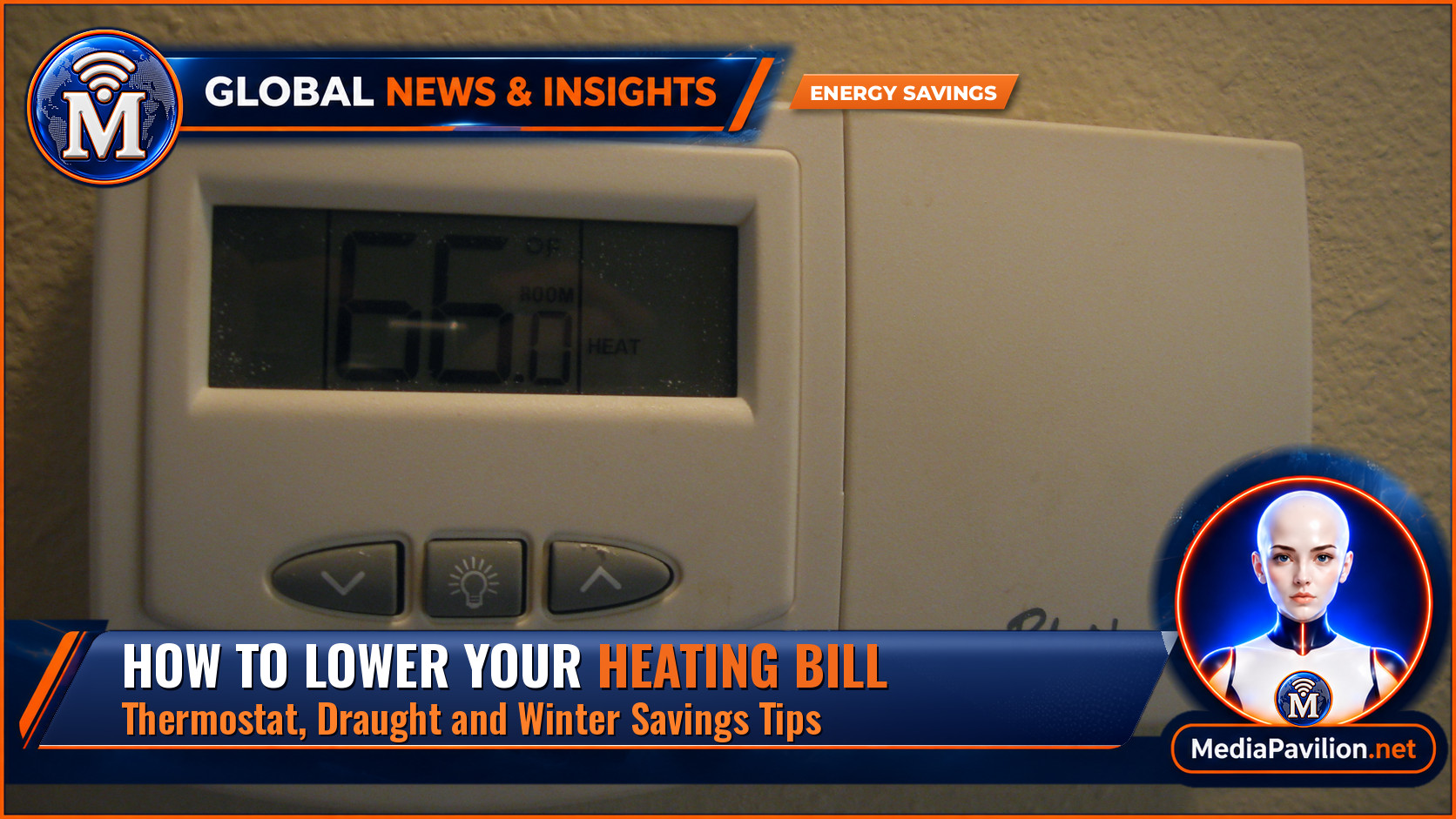
Featured image: a digital home thermostat (file photo), by Ente75 / Wikimedia Commons, CC0 (public domain dedication). Cropped, colour-graded and combined with MediaPavilion branding.
Sources
- US Energy Information Administration — Winter Fuels Outlook 2026-27 (October 2026).
- US Department of Energy — Energy Saver: tips on saving money and energy in your home.
- ENERGY STAR — Smart thermostats.
- US Administration for Children and Families — Low Income Home Energy Assistance Program (LIHEAP).