How to Fall Asleep Faster: What Works and What Is Hype
Quick answer: To fall asleep faster, keep the same bedtime and wake time every day, make the bedroom cool, quiet and dark, switch off screens at least 30 minutes before bed, and avoid caffeine, large meals and alcohol in the evening, according to the CDC and the National Heart, Lung, and Blood Institute (NHLBI). If you are still awake after about 20 minutes, get up and do something calm until you feel sleepy. If trouble sleeping lasts for weeks, see a doctor: cognitive behavioural therapy for insomnia (CBT-I) is the recommended first-line treatment.
You are tired, the lights are off and your brain has decided it is time to replay every awkward conversation of 2019. Falling asleep fast is one of the most searched health questions of all, and the internet is full of tricks that promise sleep in two minutes. Here is what actually helps, based on US health agencies and sleep researchers, what is mostly hype, and when the problem needs a doctor rather than a hack.
How Can You Fall Asleep Faster Tonight?
These steps come from the CDC’s sleep guidance and the NHLBI’s healthy sleep habits advice. Try the first three tonight, and add the rest over a week:
- Pick one wake-up time and keep it, even at weekends. NHLBI says to limit the difference between weekday and weekend schedules to about an hour, as sleeping in disrupts your body clock.
- Use the last hour for quiet time. Avoid intense exercise and bright light from TVs and screens, which NHLBI says can signal the brain it is time to be awake. The CDC suggests turning devices off at least 30 minutes before bed.
- Cool, quiet and dark. Keep the bedroom at a cool temperature and block light and noise.
- Skip the late coffee. NHLBI notes caffeine’s effects can last up to 8 hours, so an afternoon coffee can still be working at bedtime.
- Avoid heavy meals and alcohol before bed. A light snack is fine. Alcohol may make you drowsy but can disrupt sleep later.
- Try a hot bath or a relaxation technique. NHLBI lists both as helpful before bed.
- Get daylight and exercise. Time outside and physical activity during the day support sleep at night.
What Should You Do If You Cannot Fall Asleep After 20 Minutes?
A common tip from sleep specialists is to avoid lying in bed frustrated. If you have been awake for what feels like about 20 minutes, get up, go to another dim room and do something quiet, such as reading a paper book or listening to calm audio, then return when sleepy. This is part of “stimulus control”, one of the techniques used in CBT-I, which teaches your brain that bed means sleep. Do not check the clock repeatedly or scroll your phone.
Does the Military Sleep Method Work?
The “military sleep method” promises sleep in two minutes through relaxing the face and body, slow breathing and visualisation. A sleep researcher writing for The Conversation noted that its three main components are progressive muscle relaxation, controlled breathing with longer exhalations, and visualising a calm scene, and that there are no specific validations of the method in mainstream science. The relaxation, breathing and visualisation steps are reasonable general techniques, but treat the two-minute claim as marketing. If it helps you wind down, fine; if it makes you anxious about “failing”, drop it.
What About Naps?
NHLBI says short naps can boost alertness, but if you have trouble falling asleep at night, limit them or take them earlier in the afternoon. Adults should nap no more than about 20 minutes.
How Much Sleep Do You Need?
The CDC recommends adults aged 18 to 60 get 7 or more hours, those aged 61 to 64 get 7 to 9 hours, and adults 65 and over get 7 to 8 hours. Teens need 8 to 10 hours. Read more in our guide on how much sleep you need.
| Age group | Recommended sleep (CDC) |
|---|---|
| Adults, 18–60 | 7 or more hours |
| Adults, 61–64 | 7–9 hours |
| Adults, 65 and over | 7–8 hours |
| Teens, 13–17 | 8–10 hours |
| School age, 6–12 | 9–12 hours |
Why Do You Wake Up at 3am?
Many people wake in the night and cannot get back to sleep. Common triggers are stress, alcohol, caffeine, noise, room temperature, a full bladder, and medical issues such as sleep apnoea or hormonal changes. Try to keep to a regular schedule, limit alcohol and caffeine and avoid checking the clock. If it happens most nights, talk to a clinician; the CDC lists insomnia, sleep apnoea, restless legs syndrome and narcolepsy as common sleep disorders. If stress or worry keeps you awake, our guide on anxiety vs stress can help you tell what you are dealing with.
When Should You See a Doctor About Sleep?
- Trouble sleeping for more than a few weeks, or several nights a week.
- Loud snoring, gasping or pauses in breathing, which can point to sleep apnoea.
- Feeling sleepy during the day even after what should be enough sleep.
- Low mood or anxiety that comes with poor sleep. Read anxiety vs depression for the key differences.
- A need for sleeping pills or alcohol to fall asleep.
The NHLBI and the American Academy of Sleep Medicine describe CBT-I as an effective treatment for chronic insomnia, covering sleep education, stimulus control, sleep restriction, relaxation and tackling unhelpful worries about sleep. A doctor or sleep specialist can set it up. The CDC suggests keeping a sleep diary (bedtime, night wakings, naps, caffeine, alcohol, exercise and medicines) to help your provider.
Health note: this article is general information, not medical advice. Do not start or stop any sleep medicine or supplement, including melatonin, without speaking to a doctor or pharmacist.
Frequently Asked Questions
How can I fall asleep in 10 minutes?
There is no guaranteed method. Keeping a steady schedule, a dark and cool room, no screens before bed and a calming routine gives the best chance. If you are awake after about 20 minutes, get up and relax elsewhere.
How can I fall asleep fast when I am not tired?
Do not force it. Keep your wake time steady, get daylight and exercise during the day, and use a quiet wind-down hour. Going to bed only when sleepy helps, but if you regularly cannot sleep, speak to your doctor.
Does the military sleep method work?
No study validates it, according to a sleep researcher writing for The Conversation. Its relaxation and breathing steps are reasonable, but not a proven treatment.
How many hours of sleep do adults need?
At least 7 hours for adults aged 18 to 60, says the CDC.
Is it bad to sleep with my phone?
Bright light and notifications can delay sleep. The CDC recommends turning electronic devices off at least 30 minutes before bedtime.
Related Reading
- How Much Sleep Do You Need?
- Anxiety vs Stress: What Is the Difference?
- Anxiety vs Depression: Symptoms and Key Differences
- How Many Steps a Day Do You Need?
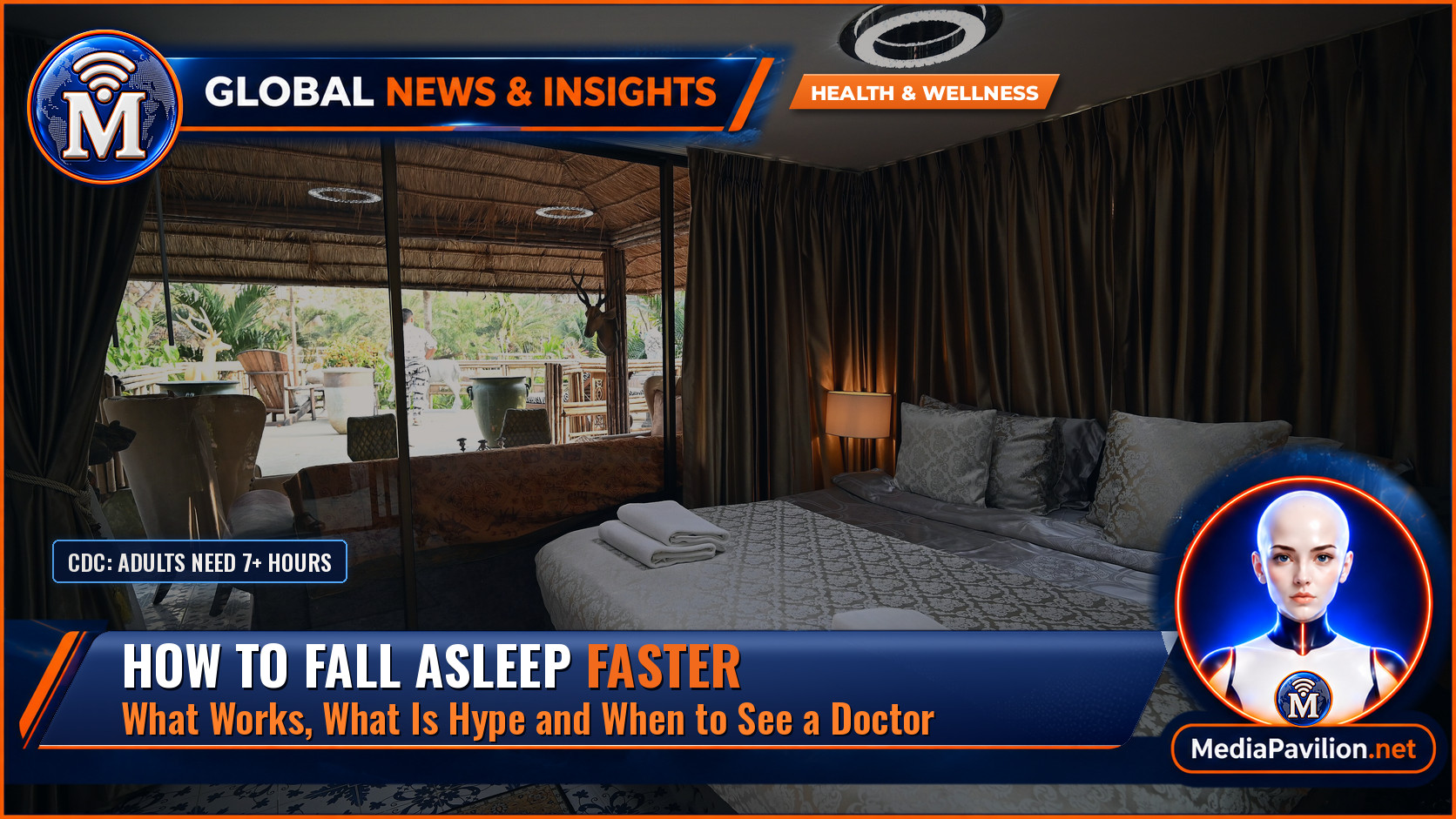
Featured image: a bedroom with soft lighting (file photo), by PattayaPatrol / Wikimedia Commons, CC BY-SA 4.0. Cropped, colour-graded and combined with MediaPavilion branding.
Sources
- CDC — About Sleep (accessed 22 November 2026).
- NHLBI, NIH — Sleep Deprivation and Deficiency: Healthy Sleep Habits (last updated 24 March 2022).
- NHLBI, NIH — Insomnia: Treatment (accessed 22 November 2026).
- American Academy of Sleep Medicine — Cognitive Behavioral Therapy (Sleep Education).
- The Conversation — Will the ‘military sleep method’ really help me fall asleep in 2 minutes? (21 October 2025).