Tipping in Japan: Is It Rude? Restaurants, Taxis, Hotels and Guides
No, you should not normally tip in Japan. The Japan National Tourism Organization (JNTO) says it is not common to tip in bars, cafes, restaurants, taxis or hotels. Leaving cash on the table is not usually seen as an insult, but it can cause confusion, and staff may well chase you down the street to return the money you “forgot”. Good service is considered part of the price.
There are a few exceptions, such as private tour guides or a special stay at a traditional inn, and some higher-end hotels and restaurants add a service charge to the bill instead. This guide explains when tipping is and is not appropriate, what those extra charges on your bill mean, and how to say thank you the Japanese way. If you are still planning your trip, see our guide to the best time to visit Japan.
Is Tipping in Japan Rude?
“Rude” is too strong for most situations, but tipping is unusual and can make people uncomfortable. Japanese service culture places great value on omotenashi, wholehearted hospitality offered without expecting anything extra in return. Offering cash on top of the bill can suggest the standard service was somehow not enough, or put staff in the awkward position of having to refuse.
Japan Guide, a long-running travel site, notes that if you leave money behind in a restaurant, staff will probably come after you to give it back. Many staff are not allowed to accept tips at all. The polite thing to do is pay the amount on the bill and say thank you.
Do You Tip in Restaurants, Taxis and Hotels in Japan?
The quick answer for most travellers:
| Situation | Tip? | What to do instead |
|---|---|---|
| Restaurants, cafes, ramen shops | No | Pay the bill, usually at the till near the door, and say gochisōsama deshita (“thank you for the meal”) |
| Bars and izakaya (pubs) | No | Expect a small seat or cover charge, often served as a starter called otoshi |
| Taxis | No | Pay the metered fare; drivers give exact change |
| Hotels (housekeeping, porters) | No | A service charge may already be included at higher-end hotels |
| Traditional inns (ryokan) | Not expected | A discreet gift of cash in an envelope is an optional gesture for exceptional, personal service |
| Private guides and interpreters | Sometimes accepted | JNTO says guides used to overseas customs may accept a tip, offered discreetly in an envelope |
| Hairdressers, spas, delivery drivers | No | A sincere thank you is enough |
What Are Service Charges and Cover Charges in Japan?
Instead of tips, you may see a few extra lines on your bill. They are normal and are not scams.
- Service charge (sābisu ryō): Hokkaido’s official tourism site says a service charge of 10% to 15% is normally added at higher-end hotels and restaurants. If you see one, you have effectively already tipped, so do not add more.
- Seat or cover charge (otoshi or tsukidashi): many izakaya serve a small dish you did not order soon after you sit down, one per person. It works as a table charge for your seat and service. If you are unsure, ask before you sit.
- Late-night surcharge: some bars and karaoke venues charge more after a set hour, which is usually shown on the menu.
- Consumption tax: Japan’s consumption tax is 10%, or 8% for food and non-alcoholic drinks bought to take away. Restaurant menu prices are typically shown including tax, but always check.
When Is It OK to Tip in Japan?
JNTO says Japan has a custom called kokorozuke, a gratuity “from the heart”, which is given only in some situations. If you have hired a private guide or interpreter who is used to working with overseas visitors, they may accept a tip as a gesture of gratitude. Even then it is not expected.
If you do decide to give something, follow these customs:
- Use an envelope. Handing over loose notes is considered crude. JNTO says small cash envelopes are sold at convenience stores, stationery shops and 100-yen stores.
- Use clean notes. Crisp, uncrumpled bills show care.
- Hand it over discreetly with both hands and a quiet thank you, ideally at the start or end of a service rather than in front of others.
- Accept a refusal gracefully. If someone declines, do not insist.
- Consider a small gift instead. A souvenir from your home country, such as a box of local sweets, is often appreciated more than cash.
How Do You Say Thank You in Japan?
Words and gestures carry more weight than money. A few simple phrases go a long way:
- Arigatō gozaimasu: “Thank you very much”, polite enough for any situation
- Gochisōsama deshita: said after a meal, to staff or to whoever paid
- Sumimasen: “Excuse me”, used to get attention, and also to say sorry or thank you
- A small bow: a slight nod or bow when thanking someone is natural and polite
Paying respect also means following local manners: queue in an orderly way, keep your voice down on trains, and place money on the small tray by the till rather than handing it straight to the cashier, where trays are provided.
How Does Tipping in Japan Compare With the US?
The contrast could hardly be bigger. In the United States, restaurant tips of 15% to 20% or more are expected because many servers rely on them for most of their income. In Japan, staff wages are built into prices, and tipping is not part of the culture. For a closer look at North American customs, see our guide to tipping in Canada vs the US.
Visitors from the UK and Australia, where tipping is optional, often find Japan’s approach familiar. Americans should resist the habit of adding 20% automatically. In Japan, the total on the bill is what you owe.
Frequently Asked Questions
Is Tipping in Japan an Insult?
Not usually an insult, but it is unexpected and can embarrass staff, who may refuse or try to return the money. Saying thank you is the best way to show appreciation.
Should I Tip a Tour Guide in Japan?
It is not required. JNTO says private guides or interpreters who are used to working with overseas visitors may accept a tip as a gesture of gratitude. If you offer one, put it in an envelope and hand it over discreetly. Group tour guides on big coach tours usually do not expect tips.
Do You Tip at a Ryokan?
It is not expected. Some guests give a small envelope of cash to the attendant who looks after their room at a high-end ryokan, as a personal thank you, but most simply say thank you warmly. If a service charge is on the bill, it already covers the service.
Do You Tip Taxi Drivers in Japan?
No. Pay the metered fare. Drivers are precise about change, and many taxis accept cards and IC transport cards.
What Happens If I Leave a Tip on the Table?
Staff will probably assume you forgot your change and may run after you to return it. To avoid an awkward moment, pay exactly what the bill says.
Related Reading
- Best Time to Visit Japan: A Season-by-Season Guide
- Tipping in Canada vs the US: How Much to Tip and Why the Rules Differ
- EES and ETIAS Explained: Europe’s New Border Rules for American Travellers
- How Much Does an ESTA Cost?
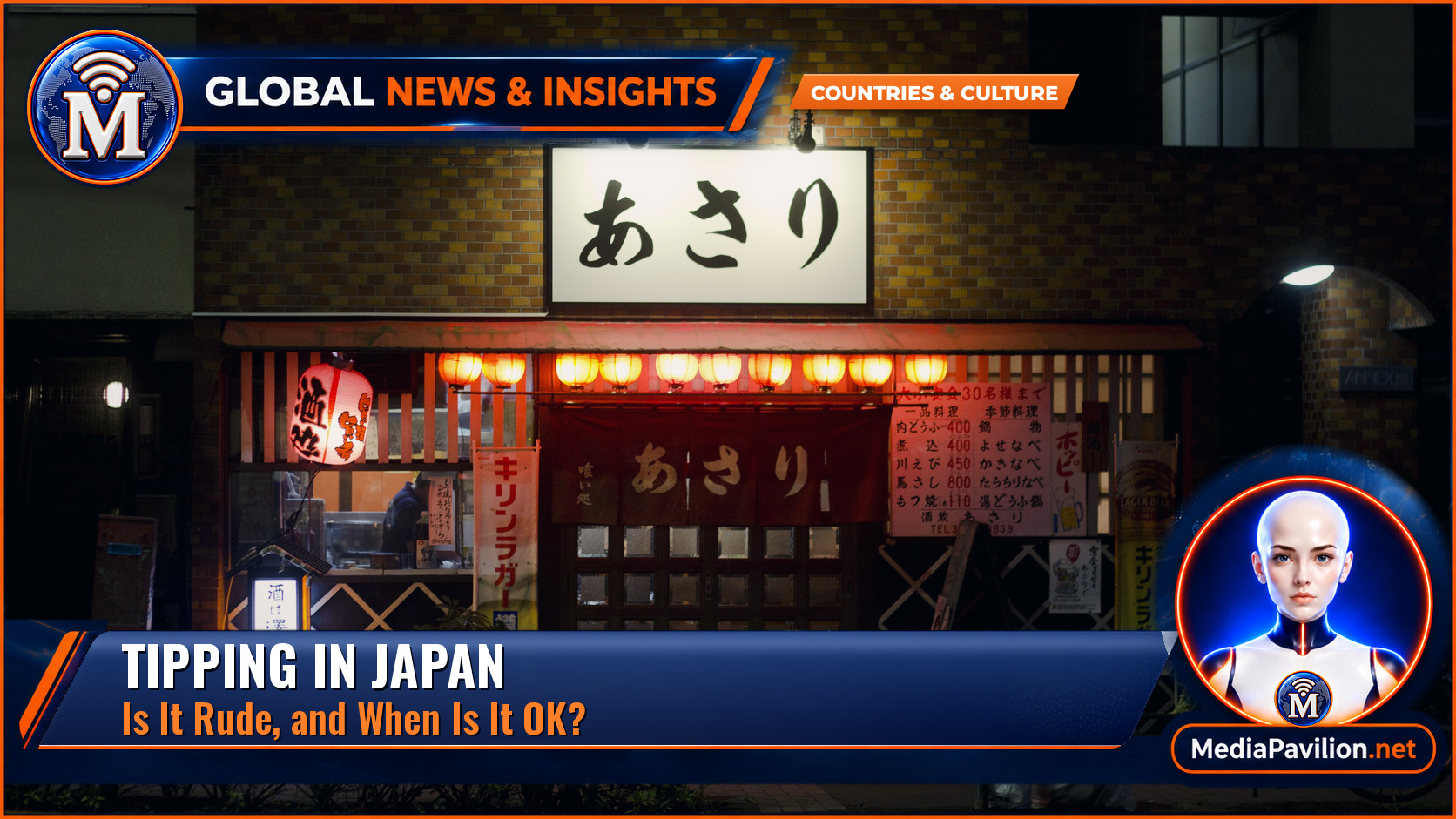
Featured image: Izakaya Exterior Gotanda, by Japanexperterna.se / Wikimedia Commons, CC BY-SA 3.0. Cropped, colour-graded and combined with MediaPavilion branding.
Sources
- Japan National Tourism Organization (JNTO) — Tipping in Japan.
- HOKKAIDO LOVE! (Hokkaido official tourism site) — Practical Information.
- Japan Guide — Eating at a Japanese restaurant.
- Ninja Go Tours — The Cover Charge and Otoshi: Why You Pay for a Dish (5 October 2026).