Running in Cold Weather: What to Wear, How Cold Is Too Cold and Safety Tips
Yes, running in cold weather is generally safe for healthy adults, provided you dress in layers, protect your hands, ears and face, and check the wind chill before you go. Mayo Clinic’s sports medicine team advises considering an indoor workout or a rest day if the air temperature falls below 0°F (minus 18°C) or the wind chill is extreme, because at wind chills below minus 18°F (minus 28°C) frostbite can develop on exposed skin in 30 minutes or less.
Winter running has real upsides. You are less likely to overheat, the paths are quieter, and keeping your routine going through the dark months helps you meet the recommended 150 minutes of moderate activity a week (see our guide to how much exercise you need). This guide covers what to wear at different temperatures, how to protect your lungs, how to spot frostbite and hypothermia, and how to stay safe on dark, icy roads.
Is It Safe to Run in Cold Weather?
For most people, yes. Your body produces a lot of heat when you run, so the main risks are not the cold itself but the wind, wet clothing, slippery surfaces and staying out too long once you slow down or stop.
The US National Weather Service explains that wind chill measures how cold it feels on exposed skin as wind strips away heat. If the temperature is 0°F and the wind is blowing at 15 mph, the wind chill is minus 19°F, and exposed skin can freeze in 30 minutes. Running into a headwind adds to the effect, because your own speed increases the airflow over your face.
Some people should take extra care and speak to a doctor first, including anyone with heart disease, asthma, Raynaud’s phenomenon or diabetes-related circulation problems. Cold weather makes the heart work harder, and sudden hard effort in the cold is not a good idea for people with existing heart conditions.
What Should You Wear for Running in Cold Weather?
The golden rule is to dress as if it is about 10 to 20 degrees Fahrenheit (roughly 5 to 10 degrees Celsius) warmer than it is. That is a widely used runners’ rule of thumb rather than a medical guideline, but it reflects Mayo Clinic’s warning that dressing too warmly is a common mistake: you will heat up within the first mile, and sweat that soaks your clothes then chills you.
Mayo Clinic recommends three layers:
- Base layer: a thin synthetic or merino wool top that wicks sweat away from your skin. Avoid cotton, which stays wet.
- Insulating layer: fleece or wool, added when it is properly cold.
- Outer layer: a waterproof, breathable shell to block wind and rain, ideally with a zip so you can vent heat.
Use the table below as a starting point, then adjust for wind, rain and how warm you tend to run.
| Temperature (air) | Top | Legs | Extras |
|---|---|---|---|
| 40 to 50°F (4 to 10°C) | Long-sleeve base layer or T-shirt plus light jacket | Shorts or light tights | Light gloves optional |
| 30 to 40°F (minus 1 to 4°C) | Long-sleeve base layer plus wind jacket | Running tights | Light gloves, headband or thin hat |
| 20 to 30°F (minus 7 to minus 1°C) | Base layer, light fleece, wind-resistant shell | Thermal tights | Hat covering ears, gloves or mittens |
| 0 to 20°F (minus 18 to minus 7°C) | Base layer, insulating layer, windproof shell | Thermal tights, windproof trousers in strong wind | Mittens with liners, buff or face cover, warm socks |
| Below 0°F (minus 18°C) or extreme wind chill | Consider a treadmill or indoor session | Thermal tights if you do go out | Mayo Clinic advises considering a break or an indoor workout |
Protect your extremities. When it is cold, blood flow is concentrated in your core, which leaves your hands, feet, ears and nose most at risk. Mayo Clinic suggests thin glove liners under heavier gloves or mittens, a hat or headband, and thermal socks. Mittens are usually warmer than gloves because your fingers share heat.
Is Running in Cold Air Bad for Your Lungs?
Cold air does not “freeze” your lungs. Air is warmed and humidified as it passes through your nose, throat and airways long before it reaches the lungs. However, cold air is usually very dry, and that can irritate the airways.
The American College of Allergy, Asthma and Immunology says the dryness of the air, rather than the temperature, is now thought to be the main trigger for exercise-induced bronchoconstriction (EIB), in which the airways narrow during or after exercise. Long-distance running and other sports done in cold weather are among the activities most likely to cause symptoms.
- Wear a buff, scarf or running mask over your mouth and nose to warm and moisten the air you breathe
- Warm up gradually indoors or at an easy pace for 10 to 15 minutes
- Breathe through your nose at easy paces if you can
- If you have asthma, follow your action plan and carry your reliever inhaler
- Seek medical advice if you regularly cough, wheeze or feel unusually breathless after cold runs
How Do You Recognise Frostbite and Hypothermia?
Both are medical problems, not just discomfort. Know the warning signs before you head out.
| Condition | Early warning signs | What to do |
|---|---|---|
| Frostnip and frostbite | Numbness, stinging, loss of feeling; skin that turns red, then white or greyish-yellow, most often on cheeks, nose, ears, fingers and toes | Get out of the cold. Warm the area gradually; do not rub it. Seek emergency care if numbness does not go away |
| Hypothermia | Intense shivering, slurred speech, loss of coordination, confusion, fatigue | Call emergency services, get indoors, remove wet clothing and warm the person gradually |
Mayo Clinic notes that the risk of frostbite is less than 5% when the air temperature is above 5°F (minus 15°C), but it rises as the wind chill falls. Hypothermia is more likely when wet clothing, wind and long exposure combine, which is why rain at 35°F (about 2°C) can be more dangerous than a dry, still day that is colder.
How Do You Stay Safe on Dark and Icy Winter Runs?
- Be seen: wear reflective details and a head torch or clip-on light, especially at dawn and dusk
- Run against traffic on roads without a pavement, so you can see cars coming
- Watch your footing: shorten your stride on ice and snow, and consider trail shoes or traction spikes
- Start into the wind: run the first half into the wind and come home with it behind you, so you are not facing a cold headwind when sweaty
- Plan short loops near home, so you can cut a run short if conditions worsen
- Tell someone your route, and carry a phone
- Drink water: you still lose fluid through sweat and breathing in winter, even if you feel less thirsty
- Change quickly afterwards: your body cools fast once you stop, so swap damp clothes for dry ones straight away
Does Running in the Cold Burn More Calories?
Possibly a little, but not enough to matter much. Your body uses some energy to keep warm, and shivering in particular raises energy use. But when you run in suitable clothing, you produce plenty of heat and rarely shiver, so the extra calories burned are usually small. The bigger benefit of winter running is consistency: keeping up the habit through the colder months.
Frequently Asked Questions
How Cold Is Too Cold to Run Outside?
There is no single cut-off, but Mayo Clinic advises considering an indoor workout or rest if the temperature falls below 0°F (minus 18°C) or the wind chill is extreme. Many runners also skip outdoor runs on icy days because of the risk of falls.
Should You Cover Your Mouth When Running in the Cold?
It can help, especially if cold air makes you cough or you have asthma. A thin buff or scarf traps warmth and moisture from your breath, so the air you breathe in is less dry.
Is It OK to Run in Shorts in Winter?
Above about 40°F (4°C), many runners are comfortable in shorts. Below that, tights or running trousers help, and in strong wind your legs can get very cold, even though they are working hard.
Can Running in the Cold Make You Ill?
Cold weather does not cause colds or flu; viruses do. But getting very cold and staying in damp clothes after a run is unpleasant and can be risky. If you are already ill, our guide on cold vs flu explains when to rest and when to see a doctor.
Does Running in Cold Weather Hurt Your Knees?
There is no good evidence that cold weather damages joints, although stiff muscles and slippery ground can raise the risk of strains and falls. A longer warm-up helps. For the wider evidence, see is running bad for your knees?
Note: this guide is general information, not medical advice. Speak to a doctor if you have a heart or lung condition, or if you are unsure whether winter exercise is safe for you.
Related Reading
- Is Running Bad for Your Knees? What the Research Really Says
- How Much Exercise Do You Need? Weekly Guidelines
- How Many Steps a Day Do You Really Need?
- Cold vs Flu: How to Tell the Difference
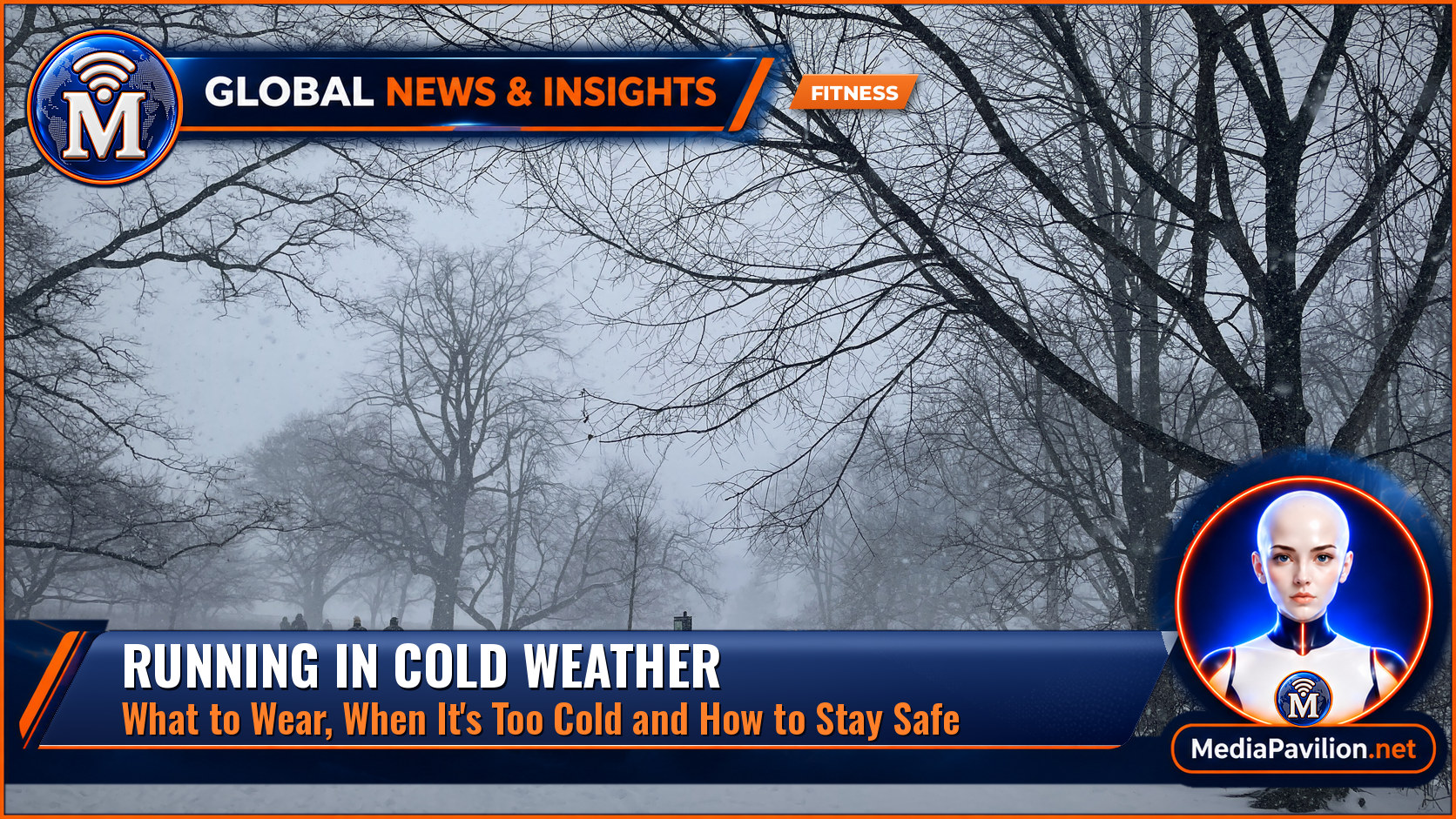
Featured image: January 25, 2026 Snow Storm in Central Park, Bridle Path on the Upper East Side, New York City 13, by Deans Charbal / Wikimedia Commons, CC BY-SA 4.0. Cropped, colour-graded and combined with MediaPavilion branding.
Sources
- Mayo Clinic Sports Medicine — Exercising outdoors in winter.
- US National Weather Service — Wind Chill Chart.
- American College of Allergy, Asthma and Immunology — Exercise-Induced Bronchoconstriction (EIB).
- Mayo Clinic — Frostbite: Symptoms and causes.
- Mayo Clinic Health System — Tips for cold-weather training.