Mediterranean Diet for Beginners: Food List, 7-Day Meal Plan and Tips
The Mediterranean diet is a way of eating, not a strict plan: build most meals around vegetables, fruit, whole grains, beans, nuts and olive oil; eat fish at least twice a week; have poultry, eggs, cheese and yoghurt in moderation; and keep red meat and sweets for occasional treats. You do not need to count calories or buy special products. Most beginners can start by changing one meal at a time.
It is one of the best-studied eating patterns in the world. Harvard T.H. Chan School of Public Health says research has consistently shown it reduces the risk of cardiovascular disease and overall mortality, and U.S. News & World Report named it the best overall diet for eight years running in its rankings up to 2025. This beginner’s guide explains what to eat, gives a simple seven-day meal plan and a shopping list, and covers the most common questions.
What Is the Mediterranean Diet?
The diet is based on the traditional eating habits of Crete, the rest of Greece and southern Italy in the mid-20th century, when those regions had low rates of chronic disease and relatively long life expectancy. In 1993, Harvard School of Public Health, the Oldways Preservation and Exchange Trust and the World Health Organization’s European office introduced the Mediterranean Diet Pyramid to explain it.
Harvard describes it as a mainly plant-based eating plan with daily whole grains, olive oil, fruit, vegetables, beans and other legumes, nuts, herbs and spices. Animal foods are eaten in smaller amounts, with fish and seafood preferred. The pattern also values daily physical activity and sharing meals with others.
What Can You Eat on the Mediterranean Diet?
| How often | Foods | Easy examples |
|---|---|---|
| Every meal or most days | Vegetables, fruit, whole grains, beans and lentils, nuts and seeds, herbs and spices, extra virgin olive oil | Salad with chickpeas, wholegrain bread, porridge with berries, lentil soup |
| At least twice a week | Fish and seafood, especially oily fish | Salmon, sardines, mackerel, tuna, prawns |
| In moderation (daily to weekly) | Poultry, eggs, cheese, yoghurt | Greek yoghurt, feta, an omelette, roast chicken |
| Occasionally (a few times a month) | Red meat and sweets | A small steak, a slice of cake at a celebration |
| Main drink | Water | Sparkling water with lemon, herbal tea, coffee or tea without lots of sugar |
Olive oil is the main added fat. Harvard recommends using it in place of butter and margarine, alongside other foods rich in healthy fats such as avocados, nuts and oily fish. Walnuts and fish are good sources of omega-3 fatty acids.
What Should You Avoid or Limit?
- Processed meats such as bacon, ham, sausages and salami
- Sugary drinks, sweets and pastries
- Refined grains such as white bread and many breakfast cereals, swapped for wholegrain versions where you can
- Ultra-processed snacks and ready meals high in salt, sugar or saturated fat
- Butter and lard as everyday cooking fats
What About Wine?
Traditional versions of the diet include a moderate amount of red wine with meals, and Harvard notes the pattern allows about one glass a day for women and one to two for men. But health bodies do not recommend starting to drink for health reasons, and many now advise that less alcohol is better. If you do not drink, there is no need to start. If you do, keep within your national guidelines, and talk to a doctor if you are pregnant, take medication or have a history of alcohol problems.
What Are the Benefits of the Mediterranean Diet?
The strongest evidence is for heart health. Harvard summarises several key findings:
- A study of nearly 26,000 US women found those who followed a Mediterranean-type diet had about 25% less risk of cardiovascular disease over 12 years
- A 2023 meta-analysis of 16 studies following more than 722,000 women found the highest adherence was linked to a 24% lower risk of cardiovascular disease and a 23% lower risk of early death
- In the Spanish PREDIMED trial, people at high risk of heart disease who followed a Mediterranean diet supplemented with extra virgin olive oil or nuts had about 30% fewer major cardiovascular events, including strokes, than a control group advised to eat a lower-fat diet
- Research also links the pattern with a lower risk of type 2 diabetes and healthier ageing
Much of this evidence is observational, which means it shows a link rather than proving cause and effect. Even so, the overall picture is unusually consistent. Harvard stresses that the benefits seem to come from the combination of foods, so it is better to adopt the overall pattern than simply to add olive oil to your current diet.
Can the Mediterranean Diet Help You Lose Weight?
It can, but it is not automatically a weight-loss diet. Because it does not set portion sizes, Harvard warns that you can still eat more calories than you need, especially with generous amounts of olive oil, nuts and bread. On the plus side, the pattern tends to be filling and easy to stick with. In a well-known Israeli trial published in the New England Journal of Medicine, people assigned to a Mediterranean diet lost weight and many kept it off over the longer term. If weight loss is your goal, combine the diet with sensible portions and regular activity.
How Do You Start the Mediterranean Diet? 10 Easy Steps
- Cook with extra virgin olive oil instead of butter.
- Add a vegetable to every meal, even breakfast: tomatoes, spinach or peppers in eggs.
- Switch to whole grains: brown rice, wholewheat pasta, oats, barley or wholegrain bread.
- Eat beans or lentils three times a week, in soups, stews, salads or dips such as hummus.
- Have fish twice a week, including canned sardines, mackerel or salmon to keep costs down.
- Snack on a small handful of nuts or a piece of fruit instead of crisps or biscuits.
- Make one meal a week meat-free, then build up.
- Use herbs, garlic, lemon and spices to add flavour without lots of salt.
- Choose fruit for dessert on most days.
- Eat slowly and with others when you can.
A Simple 7-Day Mediterranean Diet Meal Plan
| Day | Breakfast | Lunch | Dinner |
|---|---|---|---|
| Monday | Greek yoghurt, berries and walnuts | Lentil soup with wholegrain bread | Baked salmon, roast vegetables and brown rice |
| Tuesday | Porridge with sliced banana and cinnamon | Chickpea, cucumber, tomato and feta salad | Wholewheat pasta with tomato sauce, spinach and beans |
| Wednesday | Wholegrain toast with avocado and tomato | Leftover pasta salad with olives | Chicken and vegetable traybake with olive oil and herbs |
| Thursday | Vegetable omelette | Tuna and white bean salad | Vegetable and chickpea stew with couscous |
| Friday | Yoghurt with oats and fruit | Hummus wrap with salad | Grilled fish or prawns with potatoes and green beans |
| Saturday | Eggs with spinach and wholegrain toast | Minestrone soup | Homemade wholewheat pizza with vegetables and a little cheese |
| Sunday | Fruit salad with yoghurt and seeds | Greek-style salad with grilled chicken | Bean and vegetable chilli with brown rice |
Snacks: a piece of fruit, a small handful of nuts, carrot sticks with hummus, or a little cheese with wholegrain crackers. Adjust portions to your own energy needs, and see our guides on how much protein you need and how much fibre you need if you want to fine-tune your plate.
Mediterranean Diet Shopping List for Beginners
- Store cupboard: extra virgin olive oil, canned tomatoes, canned beans and chickpeas, dried lentils, wholewheat pasta, brown rice, oats, canned sardines, salmon or tuna, herbs and spices
- Fresh: seasonal vegetables, salad leaves, onions, garlic, lemons, fruit
- Fridge: plain Greek yoghurt, eggs, feta or other cheese, hummus
- Freezer: frozen vegetables, frozen berries, frozen fish fillets
- Snacks: unsalted nuts, seeds, olives
Eating this way does not need to be expensive. Canned fish, dried or canned beans, frozen vegetables and seasonal produce are some of the cheapest healthy foods available in most countries.
Frequently Asked Questions
Is the Mediterranean Diet Good for Beginners?
Yes. It is flexible, does not ban whole food groups and uses ordinary supermarket foods, which is why it is often recommended as a first step towards healthier eating.
Can You Eat Pasta and Bread on the Mediterranean Diet?
Yes, in sensible portions. Choose wholegrain versions where you can, and serve pasta with plenty of vegetables, beans or fish rather than heavy cream sauces.
Is Coffee Allowed on the Mediterranean Diet?
Yes. Coffee and tea are fine in moderation; just go easy on sugar, syrups and cream.
How Is It Different From Intermittent Fasting?
The Mediterranean diet is about what you eat; intermittent fasting is about when you eat. Some people combine the two. Our guide to intermittent fasting for beginners explains the methods and the evidence.
Who Should Check With a Doctor First?
Anyone with a medical condition, such as kidney disease, diabetes treated with medication or a history of eating disorders, should talk to a doctor or registered dietitian before making big changes.
Note: this guide is general information, not medical advice.
Related Reading
- How Much Fibre Do You Need a Day?
- How Much Protein Do You Need Per Day?
- Intermittent Fasting for Beginners
- How Much Water Should You Drink a Day?
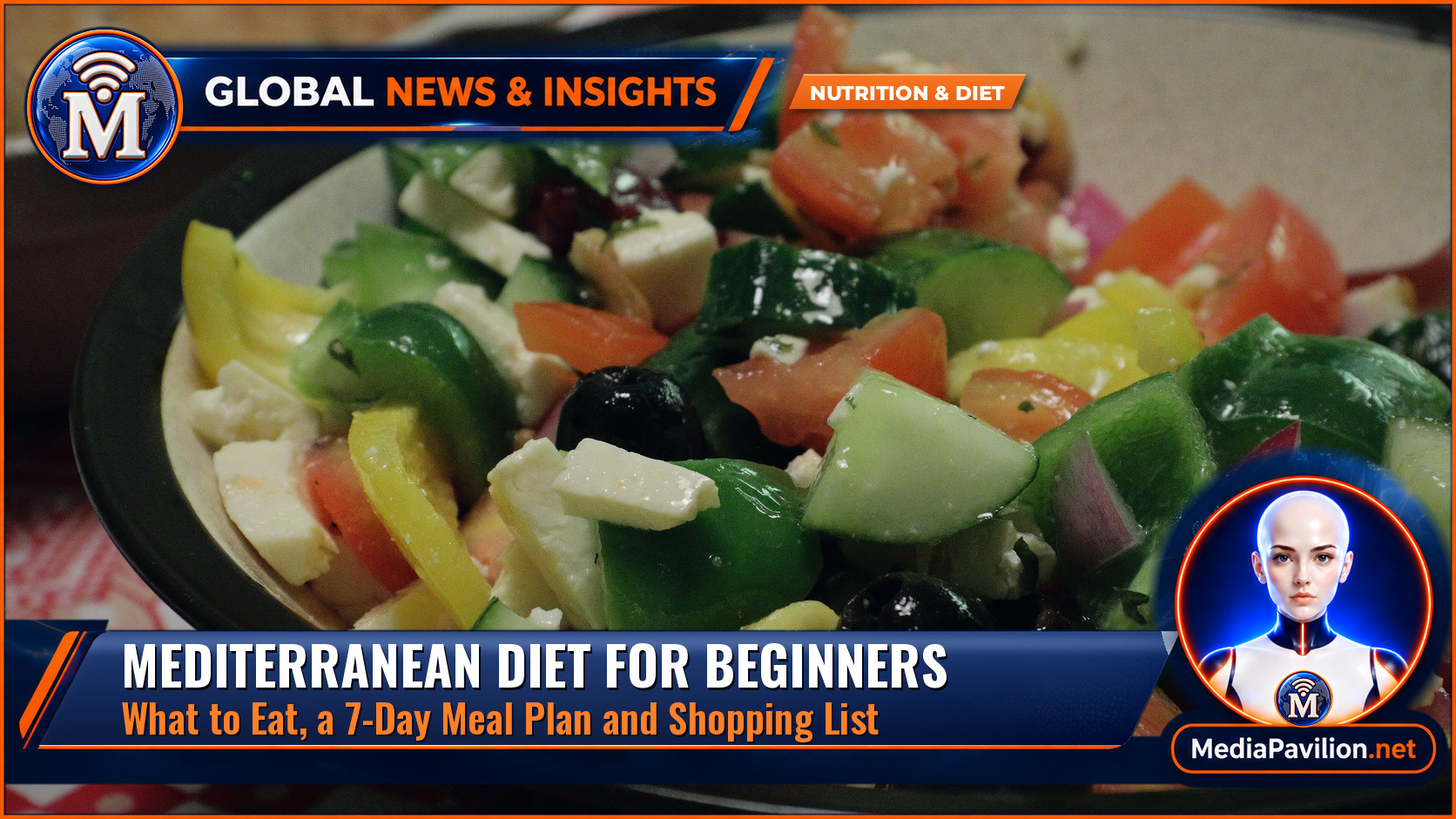
Featured image: Greek salad (5178297958), by Geoff Peters from Vancouver, BC, Canada / Wikimedia Commons, CC BY 2.0. Cropped, colour-graded and combined with MediaPavilion branding.
Sources
- Harvard T.H. Chan School of Public Health, The Nutrition Source — Diet Review: Mediterranean Diet.
- New England Journal of Medicine — Primary Prevention of Cardiovascular Disease with a Mediterranean Diet Supplemented with Extra-Virgin Olive Oil or Nuts (PREDIMED) (21 June 2018).
- Heart (BMJ) — Primary prevention of cardiovascular disease in women with a Mediterranean diet: systematic review and meta-analysis (2023).
- EatingWell — The Mediterranean Diet Was Named Healthiest Diet for the 8th Year In a Row (2025).
- New England Journal of Medicine — Weight Loss with a Low-Carbohydrate, Mediterranean, or Low-Fat Diet (17 July 2008).