Lease vs Buy a Car: Which Is Cheaper and Which Is Right for You?
Quick answer: Leasing usually means lower monthly payments, a new car every two to four years and repairs mostly covered by warranty, but you own nothing at the end and pay extra if you exceed the mileage limit or return the car with wear and tear. Buying costs more each month at first, but once the loan is paid off the car is yours, and over the long run it is almost always cheaper. Lease if you drive a predictable, modest number of miles and like changing cars often; buy if you drive a lot, keep cars for many years or want to stop making payments eventually.
Walk into almost any dealership and someone will ask whether you want to lease or finance. The lease figure will usually look tempting. With the average new-car loan payment in the US at $765 a month in the second quarter of 2026, according to Experian, it is easy to see why a lower monthly number appeals. But the monthly payment is only part of the story.
This guide explains how each option works, what it really costs, and a simple way to decide which suits you.
What Is the Difference Between Leasing and Buying a Car?
When you buy with a loan, you borrow the car’s price (minus any down payment or trade-in) and repay it with interest. You own the car, can sell it whenever you like, and the payments end once the loan is repaid.
When you lease, you pay to use the car for a fixed period, typically two to four years according to the CFPB, with an annual mileage limit. Your payments mainly cover the car’s expected depreciation over that period, plus a finance charge (called the money factor) and fees. At the end, you hand it back, lease another one, or buy it for a price set in the contract (the residual value).
Leasing vs Buying: Pros and Cons
| Factor | Leasing | Buying |
|---|---|---|
| Monthly payment | Usually lower | Usually higher |
| Upfront costs | First payment, fees, often a down payment | Down payment, taxes and fees |
| Ownership | None at the end | You own the car once the loan is repaid |
| Mileage | Limited, most commonly 10,000 to 15,000 miles a year (CFPB) | Unlimited |
| Wear and tear | Charged for excess damage at return | Affects resale value only |
| Repairs | Mostly covered by the factory warranty | Your cost once the warranty ends |
| Customising | Restricted | Allowed |
| Ending early | Can be expensive | Sell or trade whenever you like |
| Long-run cost | Higher if you always lease | Lower if you keep the car for years |
Is It Cheaper to Lease or Buy a Car?
Over the long term, buying is usually cheaper. A new car loses value fastest in its first few years. When you lease, you pay for exactly that steepest stretch of depreciation, then start again with another new car. When you buy and keep the car well beyond the loan, you get years of payment-free driving, which is where the savings come from.
Here is a simplified example. Imagine two drivers who each want a $40,000 car:
- Driver A leases for 36 months, hands the car back, and leases again, twice. After nine years, they have made 108 monthly payments and own nothing.
- Driver B buys with a 60-month loan, then keeps the car for another four years. After nine years, they have made 60 payments and still own a car with some resale value, though they have paid for maintenance and repairs in the later years.
In most realistic scenarios, Driver B spends less overall. Leasing can still win if you would otherwise trade in a financed car every two or three years anyway, or if the manufacturer is offering heavily subsidised lease deals, which is common on some electric vehicles.
When Does Leasing a Car Make Sense?
- You drive a predictable distance, comfortably under the mileage cap.
- You like having the latest safety and tech features and a car under warranty.
- You want a lower monthly payment for a more expensive car and accept that you will not build equity.
- You use the car for business. Tax treatment can differ, so speak to an accountant.
- You are unsure about a fast-changing technology, such as a particular EV, and do not want to carry the resale risk.
When Is Buying a Car Better?
- You drive a lot of miles, or your commute may change.
- You keep cars for six years or more.
- You have kids, pets or a job that is hard on interiors.
- You want the freedom to modify or sell the car at any time.
- You want to be payment-free eventually and put that money towards savings or an emergency fund.
What Should You Watch Out for in a Car Lease?
Lease contracts have their own jargon. Before you sign, make sure you understand these terms:
- Capitalised cost: the car’s price in the lease. You can and should negotiate it, just as if you were buying.
- Money factor: the interest rate in lease form. Multiply it by 2,400 to get a rough equivalent annual percentage rate.
- Residual value: what the car is expected to be worth at the end, and the price you could buy it for.
- Mileage allowance and excess charges: commonly 15 to 25 cents a mile over the limit, which adds up fast.
- Acquisition and disposition fees: charges at the start and end of the lease.
- Early termination: ending a lease early can cost thousands.
- Gap insurance: covers the difference between what you owe and the car’s value if it is written off. Many leases include it, so check.
The US Consumer Financial Protection Bureau points out that lease terms are negotiable, including the vehicle’s cost, the residual value, the money factor, the mileage limit and the purchase option. Its guide to leasing versus buying a car is a useful checklist before you visit a dealer.
How Do You Get the Best Deal on Either?
- Get pre-approved for a loan from a bank or credit union before you shop, so you can compare the dealer’s offer. Our guide to pre-qualification vs pre-approval explains the difference.
- Negotiate the price first, then discuss financing or leasing.
- Compare the total cost, not just the monthly payment. Longer loans lower the payment but raise the total interest.
- Check your credit score. Experian’s Q2 2026 data shows new-car borrowers had an average score of 751, and those with lower scores pay considerably higher rates.
- Watch the end-of-month and end-of-year sales, when dealers chase targets.
Frequently Asked Questions
Is it smart to lease a car right now?
It depends on the deal. Manufacturers sometimes subsidise leases on slow-selling models or EVs, making them unusually cheap. Compare the total lease cost with buying the same car and keeping it for several years.
Can you buy a car after leasing it?
Usually yes, for the residual value written into the contract, plus fees. It can be good value if the car is worth more than the residual at the end.
Do you need good credit to lease a car?
Generally, lenders want good to excellent credit for the best lease deals. Applicants with lower scores may face higher money factors or need larger down payments.
Does leasing a car build credit?
Yes. A lease is reported to credit bureaus like a loan, so on-time payments can help your credit history.
What happens if you go over your lease mileage?
You pay a per-mile charge set in the contract when you return the car. If you know you will go over, buying extra miles upfront is often cheaper.
The Bottom Line
Leasing buys convenience and a lower monthly payment. Buying buys ownership and, over time, lower total costs. If you drive moderate miles and enjoy a new car every few years, a well-negotiated lease can make sense. For most people who keep a car for the long haul, buying and driving it for years after the loan ends is the more economical path. Whichever you choose, settle the price before you talk about payments.
Related Reading
- Pre-Qualification vs Pre-Approval: What’s the Difference for Loans and Mortgages?
- How to Build an Emergency Fund: How Much to Save and Where to Keep It
- How Do Self-Driving Cars Work? Sensors, AI and Autonomy Levels Explained
- The 50/30/20 Rule: How to Budget Your Paycheck
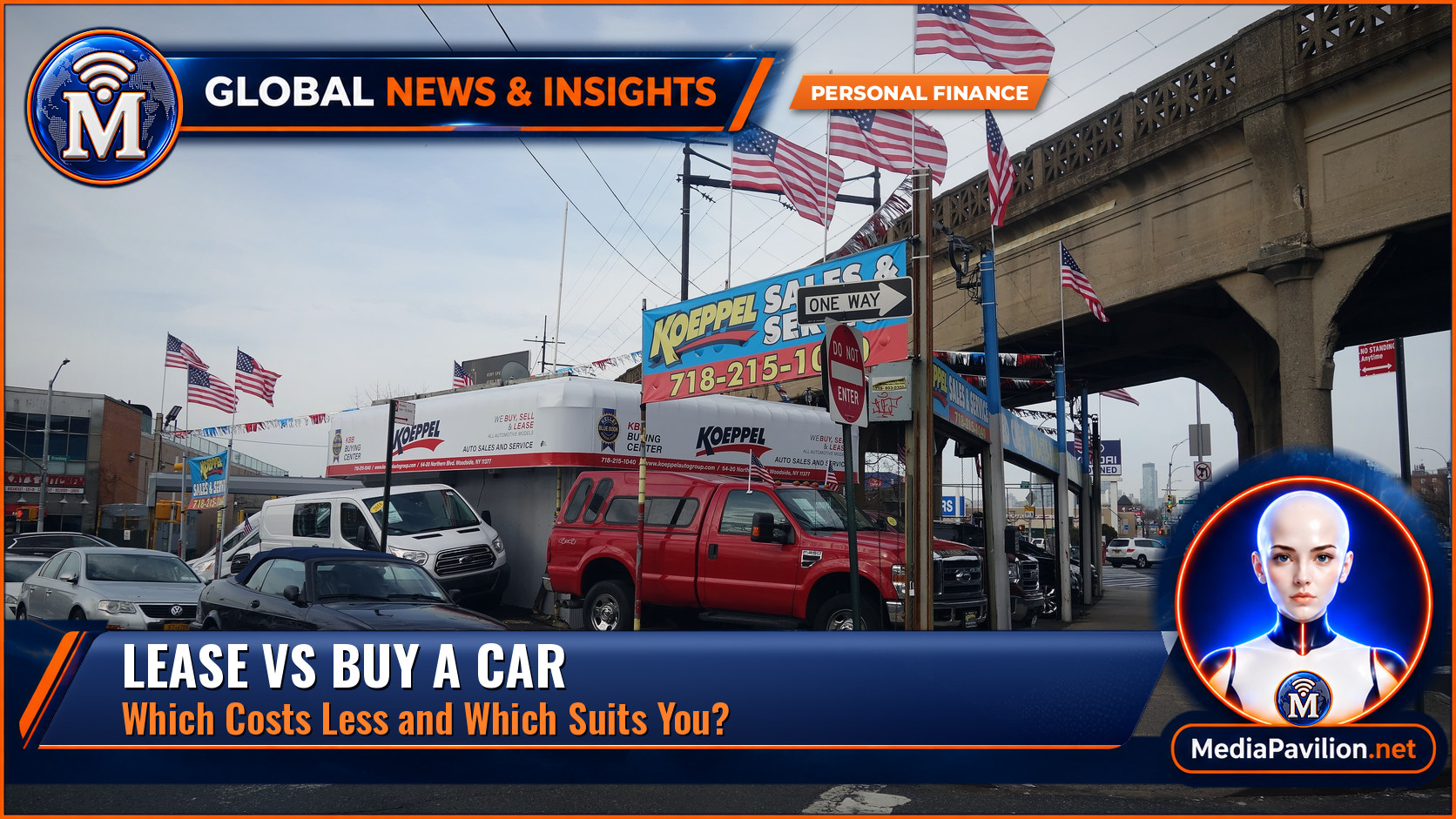
Featured image: Northern Bl 55th St td (2019-03-15) 04 – Koeppel Auto Group, by Tdorante10 / Wikimedia Commons, CC BY-SA 4.0. Cropped, colour-graded and combined with MediaPavilion branding.
Sources
- Experian — Average Car Payment in 2026 (10 September 2026).
- Consumer Financial Protection Bureau — What should I know about leasing versus buying a car?.
- Consumer Financial Protection Bureau — Auto loans.