
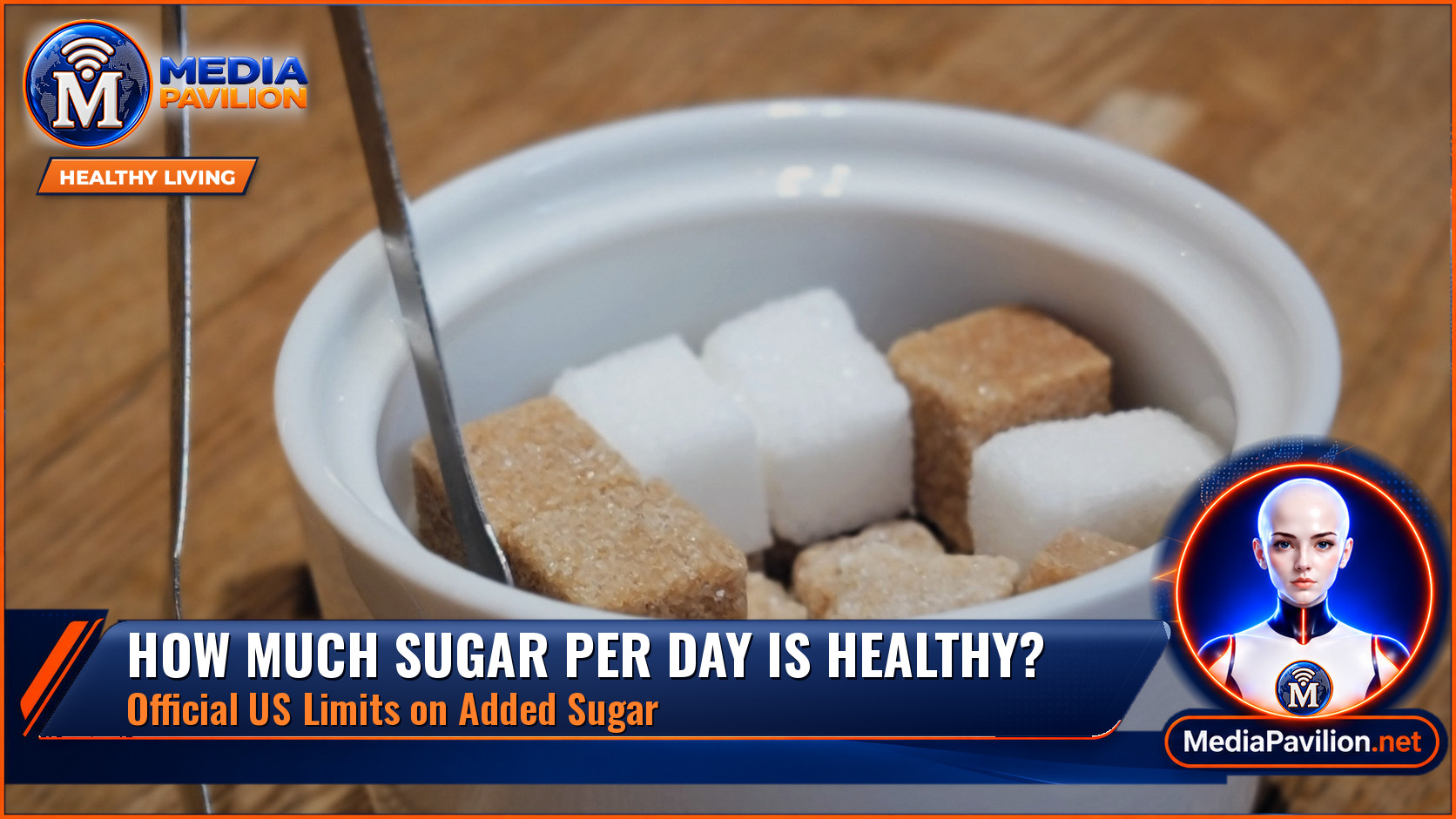
How Much Sugar Per Day Is Healthy? Official US Limits
Quick answer: There is no official Daily Value for *total* sugar. The limit that matters is added sugar. The US Food and Drug Administration (FDA) sets a Daily Value of 50 grams of added sugars a day on a 2,000-calorie diet, which is 10 per cent of calories, in line with the Dietary Guidelines for Americans. The American Heart Association (AHA) is stricter: no more than 6 teaspoons (25 grams) a day for most women and 9 teaspoons (36 grams) for most men. A typical 12-ounce can of soda has about 10 teaspoons (42 grams), already over the AHA limit for both.
“How much sugar per day is OK?” usually means two different things: the sugar that comes naturally in fruit, milk and some vegetables, and the sugar added in processing, at the table or in drinks. Official US advice focuses on the second kind, because it is easy to overdo and it crowds out more nutritious food.
This guide sets out the FDA label figure, the tighter AHA limits, how to read “added sugars” on a packet, and why honey or coconut sugar still count. It is general information, not a personal diet plan.
How Much Sugar Per Day Is Recommended?
The FDA’s added-sugars label guidance is the number most Americans will see on a packet: 50 grams a day, or 200 calories, based on a 2,000-calorie diet. That is the same “less than 10 per cent of calories” cap used in the Dietary Guidelines for Americans. If you eat more or fewer calories, the gram limit scales with your energy needs. The FDA also says there is no Daily Value for *total* sugars, because no single recommended amount has been set for the natural and added sugars combined.
The American Heart Association goes further. It recommends keeping added sugars below 6 per cent of daily calories, which works out as no more than 6 teaspoons (25 grams, or 100 calories) for most women and 9 teaspoons (36 grams, or 150 calories) for most men. The AHA notes that, on average, people aged two and over in the US still get about 12 to 13 per cent of their calories from added sugars, well above its target. Those figures were last reviewed on 14 May 2026.
Neither body is telling you to eat 50 grams of added sugar as a goal. Both treat the number as a ceiling, and the AHA’s ceiling is the one to aim for if you are thinking about heart health.
What Counts as Added Sugar?
The FDA defines added sugars as sugars put in during processing (such as sucrose or dextrose), sugars you add yourself, syrups and honey, and sugars from concentrated fruit or vegetable juices. Naturally occurring sugars in milk, fruit and vegetables do not count as added. That is why a plain apple is treated differently from apple juice cocktail, and why unsweetened milk is different from flavoured yoghurt.
Names on an ingredients list can be misleading. The AHA points out that honey, maple syrup, coconut sugar, turbinado sugar, high-fructose corn syrup, corn syrup and dextrose are all added sugars. If it was put in to sweeten the food, it counts, even if the marketing sounds wholesome.
How Do You Read the Nutrition Label?
Packaged foods in the US must list added sugars in grams and as a percentage of the Daily Value. The word “includes” before added sugars means those grams are already part of the total-sugar line, not extra on top. The FDA’s rule of thumb is that 5 per cent of Daily Value or less is a low source of added sugars, and 20 per cent or more is a high source. A yoghurt that lists 15 grams of total sugars and 7 grams of added sugars, for example, has 8 grams of natural sugar (from the milk) and 7 grams that were sweetened in, which is 14 per cent of the 50-gram Daily Value.
Drinks are often the fastest way to blow the limit. The AHA says a 12-ounce can of soda contains about 10 teaspoons (42 grams) of added sugar, nearly double its daily limit for women and more than the full daily amount for men. Sugar-sweetened drinks account for about 24 per cent of added sugars in the US diet, with desserts and sweet snacks making up about 19 per cent.
Do You Have to Give Up Sweet Foods Entirely?
No. The Dietary Guidelines, as summarised by the FDA, say a limited amount of added sugar can fit in an overall healthy pattern that still includes vegetables, fruit, grains, dairy and protein. The practical approach is to keep the sweetened drinks and packaged snacks for occasional use, and to get most of your sweetness from whole fruit, which also brings fibre and takes longer to absorb.
If you have diabetes, are reducing calories, or have been told to limit sugar for another medical reason, follow your clinician’s advice rather than the general 50-gram label figure.
Frequently Asked Questions
How much sugar per day is too much?
For most adults, more than 50 grams of added sugar on a 2,000-calorie diet exceeds the FDA Daily Value, and the AHA would already call 25 to 36 grams the preferred ceiling. One sweetened drink can be enough to go over.
Does fruit sugar count?
The natural sugar in whole fruit is not “added sugar” on the label and is not the target of these limits. Fruit juice and sweetened fruit products are a different matter, because fibre is lower and sugar can be concentrated or added.
Is honey healthier than table sugar?
It is still an added sugar, with a similar calorie load. The AHA says not to treat alternative sugars as a free pass.
How much sugar per day should a woman or a man have?
The AHA’s specific caps are 6 teaspoons (25 grams) for most women and 9 teaspoons (36 grams) for most men. The FDA label uses one 50-gram Daily Value for a 2,000-calorie diet, not a separate male and female figure.
The Bottom Line
Aim first at added sugars, not every gram of sugar in fruit or plain milk. The official US label limit is 50 grams a day on a 2,000-calorie diet; the American Heart Association’s tighter caps of 25 grams for most women and 36 grams for most men are a better everyday target. Read the “added sugars” line, be sceptical of “natural” sweeteners in packaged food, and watch drinks. For related nutrition questions, see our guides to the Mediterranean diet for beginners, how much protein you need and how much fibre you need.
Related Reading
- Mediterranean Diet for Beginners: Food List, 7-Day Meal Plan and Tips
- How Much Protein Do You Need Per Day? Official Guidelines Explained
- How Much Fibre Do You Need a Day? Targets, the Best Foods and How to Eat More
- How Much Vitamin D Do You Need per Day? Official Guidelines Explained
Featured image: A bowl of white and brown sugar cubes with tongs, by Викидим / Wikimedia Commons, CC BY-SA 4.0. Cropped, colour-graded and combined with MediaPavilion branding. Image licensed CC BY-SA 4.0.
Sources
- US Food and Drug Administration — Added Sugars on the Nutrition Facts Label.
- American Heart Association — How Much Sugar Is Too Much? (14 May 2026).
- US Centers for Disease Control and Prevention — Get the Facts: Added Sugars.