Anxiety vs Depression: Symptoms and Key Differences
Quick answer: Anxiety is mainly about fear and worry about what might happen: racing thoughts, restlessness, tension, a pounding heart. Depression is mainly about low mood and loss of interest: sadness or emptiness, no energy, little pleasure in things you used to enjoy. They often overlap, and many people have both. If symptoms last two weeks or more and get in the way of daily life, talk to a doctor or mental health professional. In the US, call or text 988 any time if you are in crisis.
You lie awake replaying tomorrow’s meeting. Or you lie awake because nothing feels worth getting up for. Both are miserable, both steal sleep, and both are incredibly common. But they are not the same thing, and knowing which one you are dealing with makes it easier to find the right help.
This guide explains the difference between anxiety and depression in plain language, using information from the US National Institute of Mental Health (NIMH) and other health bodies. It is not a diagnosis; only a qualified professional can give you one.
What is the difference between anxiety and depression?
The simplest way to think about it: anxiety looks forward with fear, depression looks inward with heaviness.
- Anxiety disorders involve worry or fear that does not go away and can get worse over time, according to NIMH. Common types include generalised anxiety disorder, panic disorder and social anxiety disorder.
- Depression (major depressive disorder) involves a persistent sad, anxious or “empty” mood, or loss of interest or pleasure in activities, for most of the day, nearly every day, for at least two weeks, NIMH says.
Everyday worry and sadness are normal. The line is crossed when the feelings are intense, long-lasting and start to interfere with work, relationships or daily tasks.
Anxiety vs depression symptoms: how do they compare?
| Sign | Anxiety | Depression |
|---|---|---|
| Core feeling | Fear, dread, worry about what could go wrong | Sadness, emptiness, hopelessness |
| Energy | Wired, restless, on edge | Drained, slowed down, exhausted |
| Thoughts | Racing, “what if” thinking, hard to switch off | Slow, self-critical, guilt, hard to concentrate |
| Body | Fast heartbeat, sweating, shaking, stomach upset, muscle tension | Aches, appetite or weight changes, heaviness |
| Sleep | Trouble falling asleep because the mind will not stop | Waking early or sleeping far more than usual |
| Behaviour | Avoiding situations that trigger fear | Withdrawing from people and activities you used to enjoy |
Notice the overlap: poor sleep, irritability, trouble concentrating and fatigue appear in both. That is one reason they are easy to confuse.
Can you have anxiety and depression at the same time?
Yes, and it is common. NIMH notes that anxiety disorders often occur alongside depression, and many people with depression also report anxious feelings. Treatment for one often helps the other, which is why a professional will usually ask about both.
How common are they? NIMH estimates 19.1% of US adults had an anxiety disorder in the past year, and about 21 million adults (8.3%) had at least one major depressive episode in 2021. Both are more common in women than men, and depression rates were highest among adults aged 18 to 25.
How do you know if it is anxiety or depression?
Try asking yourself a few honest questions. They are not a test, but they can help you describe things to a doctor:
- Is my main feeling fear or flatness? Worry and dread lean towards anxiety; numbness and loss of interest lean towards depression.
- Am I avoiding things because they scare me, or because I cannot see the point?
- Has this lasted more than two weeks?
- Is it affecting work, school, sleep or relationships?
- Do I ever think about harming myself? If yes, seek help today (see below).
Doctors often use short questionnaires: the PHQ-9 for depression and the GAD-7 for anxiety. You may be asked to fill one in at a primary care visit. Online versions exist, but treat any result as a reason to talk to someone, not as a diagnosis.
Anxiety vs stress vs depression: where does stress fit?
Stress is a response to a specific pressure, like a deadline, and usually fades once the pressure passes. Anxiety can continue without an obvious trigger. Depression is a persistent change in mood. Our guide to anxiety vs stress covers that first distinction in more detail, and if long-term work pressure has left you exhausted, read about the signs of burnout.
How are anxiety and depression treated?
Both are very treatable. NIMH lists the main options:
- Talk therapy (psychotherapy): cognitive behavioural therapy (CBT) is well studied for both conditions and teaches practical ways to handle anxious thoughts and low mood.
- Medication: a doctor may prescribe antidepressants such as SSRIs, which are used for both depression and several anxiety disorders. Medication decisions should always be made with a clinician.
- A combination of therapy and medication works best for many people.
Everyday habits will not replace treatment, but they support it: regular sleep (see how much sleep you need), movement such as walking or starting to run, limiting alcohol, and staying connected with people you trust.
When should you get help?
See a doctor or licensed therapist if symptoms last more than two weeks, keep coming back, or make daily life hard. You do not need to wait until things are severe.
If you are in crisis or thinking about suicide, get help now. In the US, call or text 988 to reach the 988 Suicide & Crisis Lifeline, available 24/7. In the UK and Ireland, call Samaritans on 116 123. In an emergency, call 911 (US) or your local emergency number.
Frequently asked questions
Is anxiety worse than depression?
Neither is “worse”; both range from mild to severe and both can be serious. What matters is how much the symptoms affect your life and getting the right support.
Can anxiety turn into depression?
Long-running anxiety can wear people down and is linked with later depression, and the two often appear together. Getting help early for either one is the best way to reduce that risk.
Anxiety vs depression medication: are they the same?
Often, yes. Some antidepressants, particularly SSRIs, are prescribed for both. Other medicines are specific to anxiety. Only a prescriber can decide what suits you.
Is there an anxiety vs depression test?
There is no blood test. Clinicians use interviews and validated questionnaires such as the PHQ-9 and GAD-7, and may check for physical causes such as thyroid problems.
*This article is for general information and is not medical advice. Always consult a qualified health professional about your own symptoms.*
Related Reading
- Anxiety vs Stress: How to Tell the Difference
- Burnout: Signs, Causes and How to Recover
- How Much Sleep Do You Need?
- How to Start Running: A Beginner’s Plan
- Remote Work vs In Office: Pros, Cons and 2026 Figures
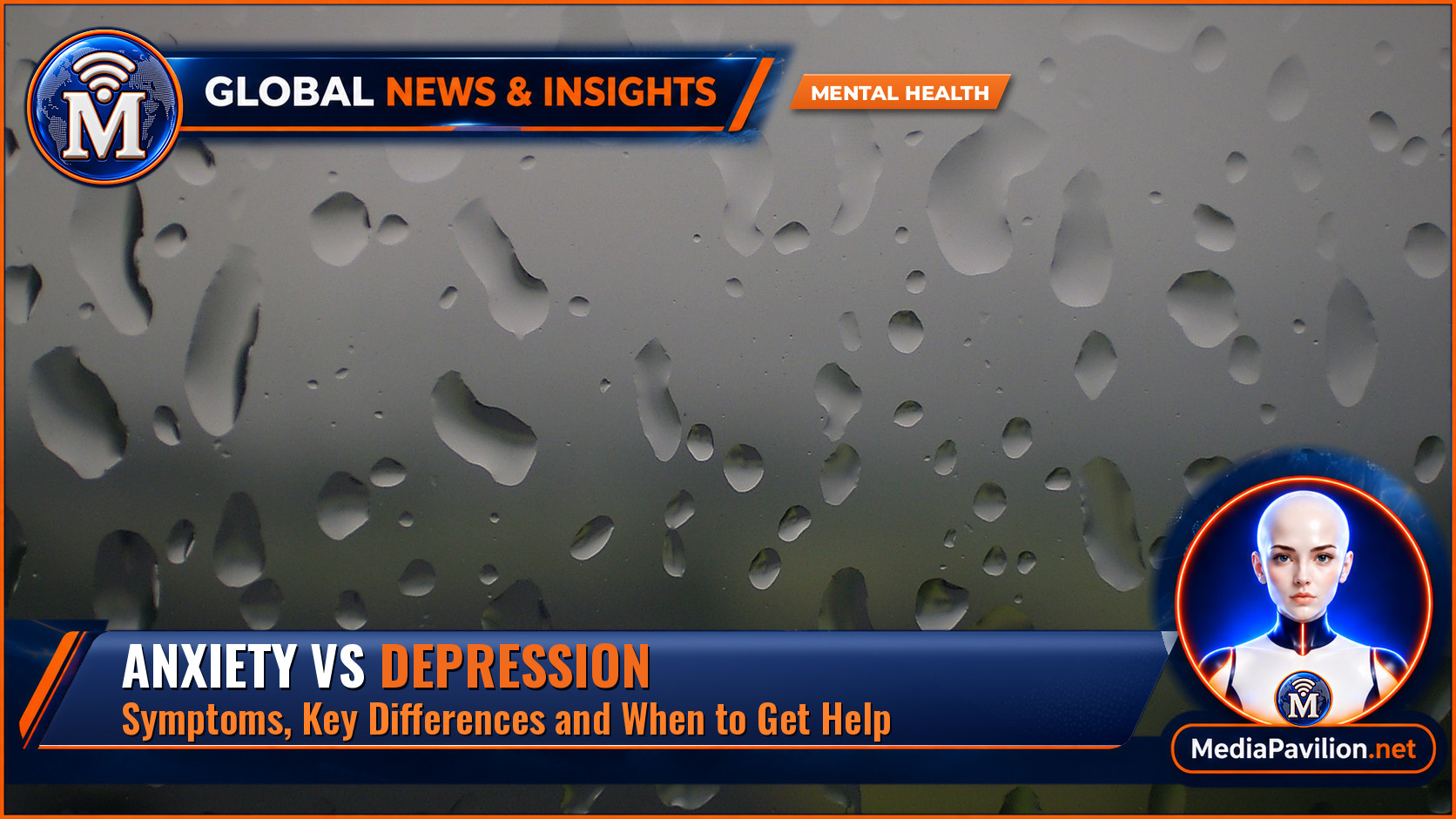
Featured image: rain drops on a window (illustrative file photo), by Frank Vincentz / Wikimedia Commons, CC BY-SA 3.0. Cropped, colour-graded and combined with MediaPavilion branding.
Sources
- National Institute of Mental Health — Depression (accessed November 2026).
- National Institute of Mental Health — Anxiety Disorders (accessed November 2026).
- National Institute of Mental Health — Major Depression statistics (accessed November 2026).
- National Institute of Mental Health — Any Anxiety Disorder statistics (accessed November 2026).
- 988 Suicide & Crisis Lifeline — Get help (accessed November 2026).