FDA GLP-1 Vision Loss Warning: What Ozempic Users Should Know
The US Food and Drug Administration (FDA) has ordered the makers of every GLP-1 medicine, including Ozempic, Wegovy, Mounjaro and Zepbound, to add a warning about a rare eye condition that can cause sudden and permanent vision loss in one eye. The condition is non-arteritic anterior ischaemic optic neuropathy, usually shortened to NAION. The FDA announced the change in a drug safety communication on 9 November 2026 after reviewing clinical trial data, real-world studies and adverse-event reports.
The agency describes the risk as “potential” and the condition as rare. It has not concluded that the drugs directly cause NAION, and it says patients should not stop treatment on their own. Here is what the warning says, how big the risk appears to be and what to do if you take one of these medicines.
What Has the FDA Announced About GLP-1 Drugs and Vision Loss?
The FDA is requiring the companies that hold approvals for all GLP-1 receptor agonists to add information about a potential increased risk of NAION to the Warnings and Precautions section of their labels. According to the FDA, NAION cases have been reported for every GLP-1 product currently on the US market.
The requirement covers both diabetes and weight-loss brands. The FDA’s list includes:
- Semaglutide: Ozempic, Wegovy and the oral tablet Rybelsus
- Tirzepatide: Mounjaro and Zepbound (tirzepatide also acts on the GIP hormone receptor)
- Liraglutide: Victoza, Saxenda and Xultophy
- Dulaglutide: Trulicity
- Lixisenatide: Soliqua
- Orforglipron: Foundayo, approved in 2026
- Exenatide: generic versions (the Byetta brand has been withdrawn, not for safety reasons)
NBC News reported that spokespeople for Novo Nordisk, which makes Ozempic and Wegovy, and Eli Lilly, which makes Mounjaro and Zepbound, said patient safety was their top priority.
What Is NAION and What Are the Symptoms?
NAION happens when blood flow to the front of the optic nerve, the optic disc, is reduced. The nerve carries signals from the eye to the brain, so the damage can cause vision loss. The FDA says the underlying cause is not fully understood. There is no proven treatment, and lost vision often does not come back.
The FDA lists these symptoms:
- Sudden, painless loss of vision in one eye, often noticed on waking
- Blurred or missing areas of vision, such as blind spots or tunnel vision
- Colours that look washed out or distorted
- Blurry or hazy spots that reduce sharp central vision
Known risk factors include smoking, diabetes, high blood pressure, sleep apnoea, anaemia and kidney disease. Many of these are common in people prescribed GLP-1 drugs, which is one reason the link has been hard to prove. If NAION affects one eye, the risk to the other eye rises.
How Big Is the Risk?
The absolute risk is small. The FDA pooled 126 randomised controlled trials involving 134,253 patients. It found 6.4 NAION cases per 100,000 person-years among people taking GLP-1 drugs, compared with 3.8 per 100,000 person-years in people taking a placebo or another glucose-lowering medicine. That works out at roughly 2.6 extra cases for every 100,000 people treated for a year, although the trials recorded only 15 probable cases in total.
Real-world data were mixed. In the FDA’s Sentinel study of adults with type 2 diabetes, there was no statistically significant difference in NAION risk between GLP-1 drugs and SGLT-2 inhibitors such as Jardiance or Farxiga. There was a higher risk compared with DPP-4 inhibitors such as Januvia, with a hazard ratio of 1.43. Published observational studies generally pointed the same way. The FDA’s review of animal data found no mechanism to explain how the drugs could raise the risk.
For comparison, NAION occurs in about 2.3 to 10.2 people per 100,000 a year among adults over 50, according to the FDA’s review of published research.
Should You Stop Taking Ozempic, Wegovy or Mounjaro?
Not without medical advice. The FDA tells patients to contact a healthcare professional right away if they notice any of the symptoms above. Anyone who has already had NAION should discuss with their doctor whether to continue a GLP-1 medicine. For doctors, the agency says to refer suspected cases promptly to an ophthalmologist and to consider stopping the drug if NAION develops, unless the benefits clearly outweigh the risk.
Dr Manjot Gill, an ophthalmologist at Northwestern Medicine in Chicago, told NBC News the warning was appropriate but said patients should not become “overly concerned and anxious” and stop their medication. She said the main point was awareness, so that anyone who notices a change in their vision sees an eye specialist quickly.
These medicines have proven benefits for many people, including lower blood sugar, weight loss and, for some brands, reduced risk of heart attack, stroke and kidney disease. If you are weighing up diet changes alongside or instead of medication, our guides on intermittent fasting for beginners and how much protein you need per day summarise what the official guidance says.
Why Did the FDA Act Now?
The review began after a July 2024 study in JAMA Ophthalmology by Hathaway and colleagues, which found a higher rate of NAION in patients prescribed semaglutide at a Boston eye hospital. The FDA said that study had limitations but justified a wider look at trial, animal and post-marketing data. Across Europe, regulators reached a similar view earlier: in June 2025 the European Medicines Agency’s safety committee concluded that NAION is a very rare side effect of semaglutide medicines.
GLP-1 labels already carry other warnings, including pancreatitis, gallbladder problems and kidney injury, plus a boxed warning about a possible risk of thyroid tumours. Side effects can be reported to the FDA’s MedWatch programme online or on 1-800-332-1088.
Related Reading
- Intermittent Fasting for Beginners: Methods, Evidence and How to Start Safely
- How Much Exercise Do You Need? Weekly Guidelines
- How Much Sleep Do You Need? Official Recommendations by Age
- More health and medical news
Note: this article is for general information and is not medical advice. Speak to your doctor or pharmacist before changing any medication.
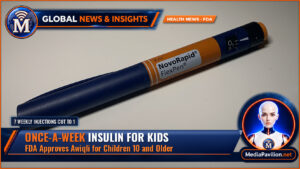
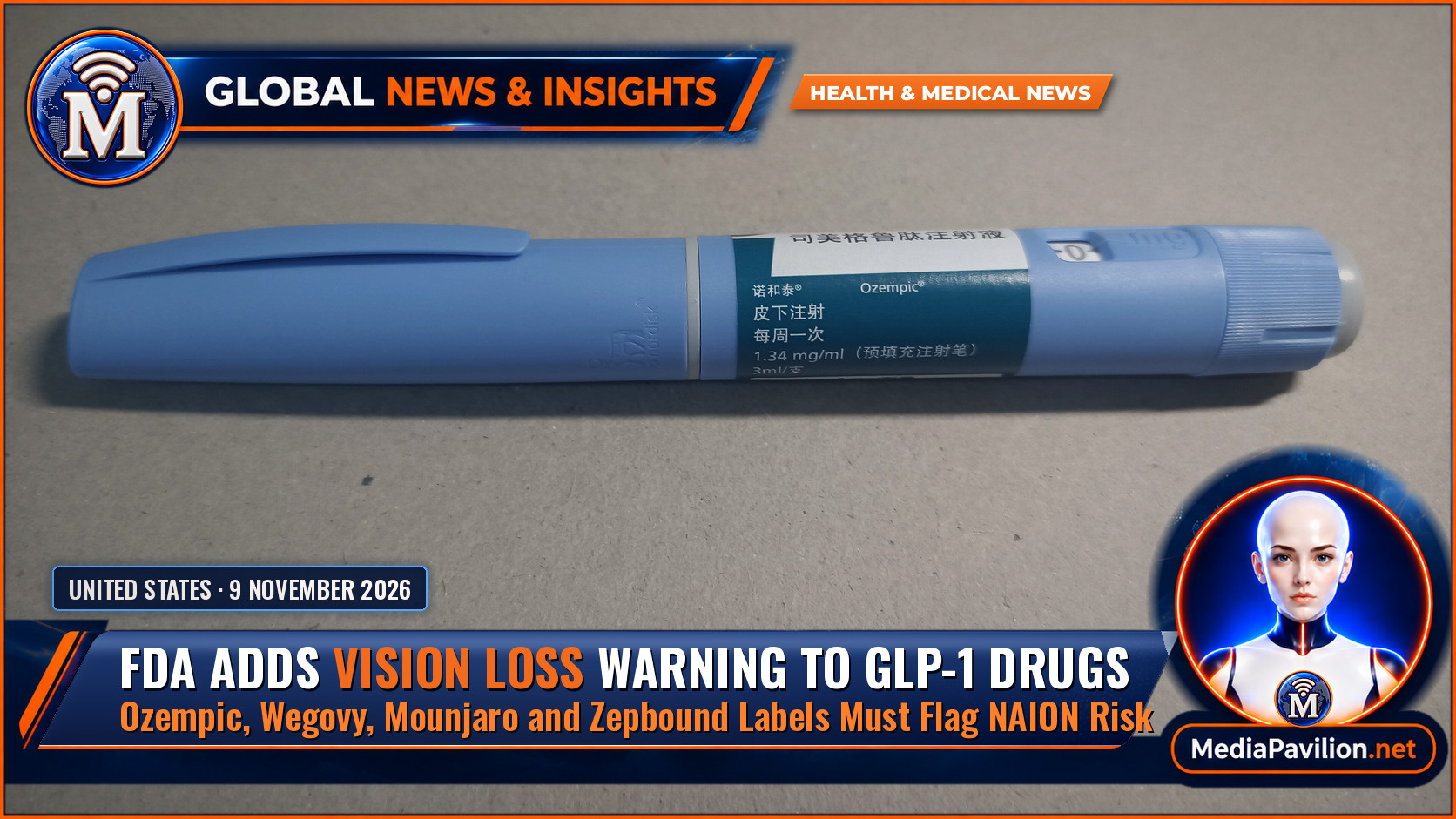
Featured image: an Ozempic (semaglutide) injection pen, by HualinXMN / Wikimedia Commons, CC BY-SA 4.0. File photo.
Sources
- US Food and Drug Administration — FDA Requires Safety Labeling Changes for GLP-1 RAs Due to Potential Increased Risk of Rare But Serious Eye Condition (9 November 2026).
- NBC News — FDA orders new warning on GLP-1s over rare eye condition linked to sudden blindness (9 November 2026).
- The Washington Post — FDA tells GLP-1 makers to warn of potential vision loss side effect (9 November 2026).
- JAMA Ophthalmology via PubMed (Hathaway et al.) — Risk of Nonarteritic Anterior Ischemic Optic Neuropathy in Patients Prescribed Semaglutide (July 2024).
- European Medicines Agency — PRAC concludes eye condition NAION is a very rare side effect of semaglutide medicines (June 2025).