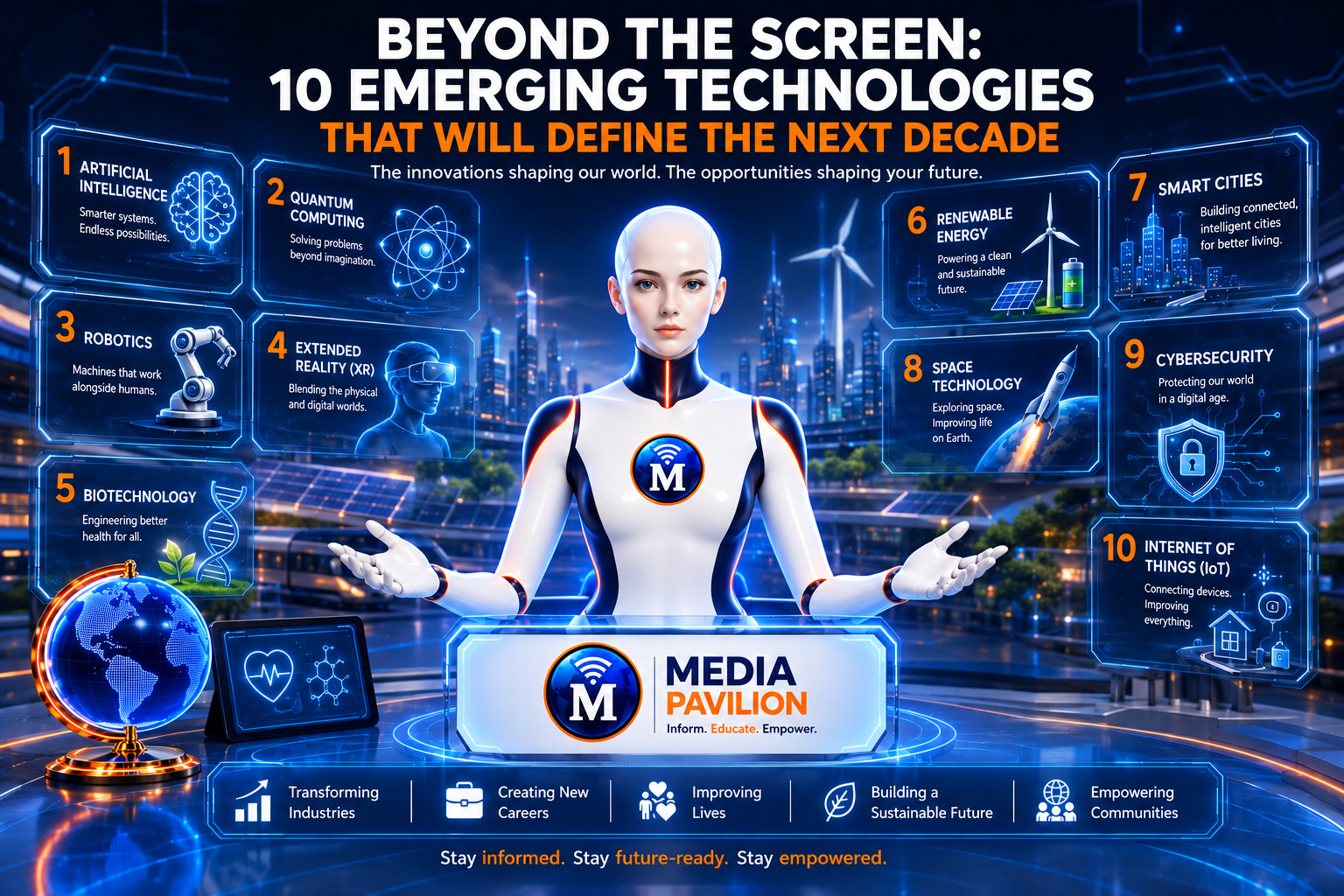
Beyond the Screen: 10 Emerging Technologies to Watch Over the Next Decade
This is an editorial overview of technologies to watch, not a ranked forecast or a guarantee of commercial success within a fixed period. The linked background sources explain capabilities and limitations; they do not endorse every future scenario discussed here.
Every generation witnesses technological breakthroughs that fundamentally change how people live, work, communicate, and solve problems. The internet transformed the world in the 1990s. Smartphones redefined modern life in the 2000s. Artificial Intelligence is now leading another technological revolution—but it is only one piece of a much bigger picture.
Around the globe, scientists, engineers, entrepreneurs, and innovators are building technologies that could reshape nearly every industry over the next decade. Some are already changing lives today, while others are just beginning to move from research laboratories into the real world.
From artificial intelligence and quantum computing to biotechnology, renewable energy, robotics, and space technology, these innovations could influence everything from healthcare and education to transportation, business, employment, and the way societies function.
Here are ten emerging technologies worth watching—and why they matter.
Artificial Intelligence Is Becoming a New Digital Workforce
Artificial Intelligence has evolved from a niche research field into one of the world’s most influential technologies. Its capabilities now extend far beyond traditional automation, allowing computer systems to analyse information, recognise patterns, generate content, and assist people with increasingly complex tasks.
How AI Is Transforming Everyday Life
AI can analyse vast amounts of data, recognise patterns, generate text and images, automate repetitive tasks, assist medical professionals, improve customer service, and accelerate scientific discoveries.
Many people already encounter AI through search engines, recommendation systems, digital assistants, fraud detection, navigation applications, translation tools, and increasingly sophisticated productivity platforms.
AI as a Partner to Human Intelligence
Rather than simply replacing human intelligence, AI is increasingly becoming a powerful partner that helps people work smarter, make better decisions, and unlock new opportunities.
The long-term significance of AI may therefore depend not only on how intelligent machines become, but on how effectively people learn to combine artificial intelligence with human creativity, judgment, and responsibility.
Quantum Computing Could Transform Complex Problem-Solving
Today’s computers process information using bits that represent either a 0 or a 1. Quantum computers approach computation differently by using quantum bits, or qubits, which can exist in combinations of states according to the principles of quantum mechanics.
This fundamental difference could eventually allow quantum computers to tackle certain classes of problems that are extremely difficult for conventional computers.
Where Quantum Computing Could Make a Difference
Although quantum computing is still developing, its potential applications include drug discovery, financial modelling, logistics, materials science, weather forecasting, and cybersecurity.
The technology could become particularly valuable for problems involving enormous numbers of possible combinations and complex simulations.
Why Quantum Computing Still Has a Long Road Ahead
Quantum computing remains an emerging field with significant technical challenges. Building and maintaining useful quantum systems is difficult, and practical large-scale applications are still being developed.
Nevertheless, its potential makes quantum computing one of the technologies that could have an extraordinary impact on the next generation of computing.
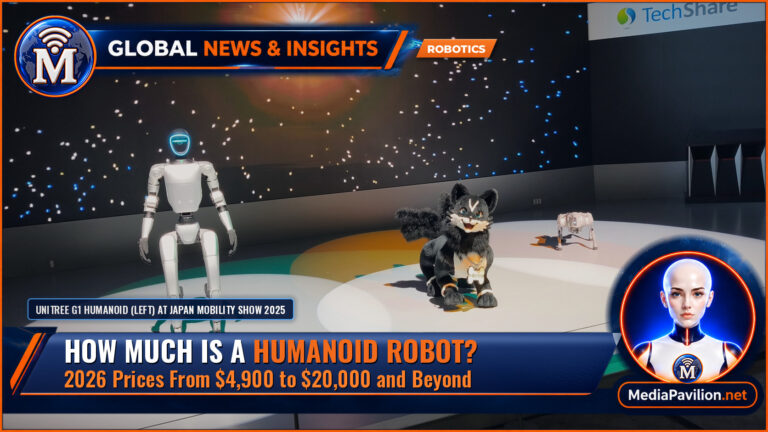
Robotics Is Bringing Intelligent Machines Into the Physical World
While software-based AI operates primarily in the digital environment, robotics brings intelligence into the physical world.
Modern robots are becoming more intelligent, flexible, precise, and collaborative. They are already being used in environments ranging from hospitals and factories to warehouses, farms, laboratories, and hazardous locations.
Robots Are Already Working Alongside Humans
Robots can assist surgeons during complex procedures, help warehouse workers manage inventory, support farmers with harvesting and monitoring, explore dangerous environments, and perform tasks in settings that may be unsafe for people.
Their ability to perform repetitive or physically demanding work can increase efficiency while reducing certain workplace risks.
The Next Generation of Human-Robot Collaboration
Future robots are likely to become increasingly capable of working alongside people rather than operating completely independently.
Advances in AI, sensors, computer vision, and machine learning could allow robots to better understand their surroundings and respond to changing conditions.
The result could be a new generation of machines designed to complement human workers across numerous industries.
Extended Reality Could Redefine How We Experience Digital Information
Extended Reality, commonly known as XR, encompasses technologies such as Virtual Reality (VR), Augmented Reality (AR), and Mixed Reality (MR).
Instead of interacting with digital information only through traditional screens, XR allows digital elements to become immersive or integrated into the user’s physical environment.
From Classrooms to Hospitals
Imagine students exploring ancient civilizations without leaving the classroom, architects examining buildings before construction begins, or doctors practising complex procedures through immersive simulations.
These applications demonstrate how XR could make information more interactive and experiential.
The Growing Potential of Immersive Technology
As hardware becomes more capable and accessible, XR could influence education, entertainment, healthcare, engineering, manufacturing, tourism, training, and remote collaboration.
The technology’s greatest value may come from situations where seeing, experiencing, or interacting with information is more effective than simply reading about it.
Biotechnology Is Opening New Possibilities in Health and Food Production
Biotechnology is helping scientists understand biological systems at increasingly sophisticated levels.
Researchers are developing personalised medicines, improving vaccine technologies, engineering crops with desirable characteristics, and exploring new approaches to treating genetic disorders.
Personalised Medicine and Advanced Healthcare
One of biotechnology’s most important possibilities is the ability to develop treatments that are increasingly tailored to individual biological characteristics.
As researchers learn more about genetics and disease mechanisms, medicine could become more precise and targeted.
Biotechnology and Global Food Security
Biotechnology also extends beyond healthcare. Researchers are exploring ways to develop crops that can withstand difficult environmental conditions, resist certain pests, and produce reliable yields.
Such innovations could become increasingly important as populations grow and agriculture faces challenges related to climate, water availability, and changing environmental conditions.
Renewable Energy Innovation Is Reshaping the Future of Power
The global energy landscape is evolving beyond traditional fossil-fuel systems and conventional renewable technologies.
Solar and wind power remain important, but innovation is also occurring in energy storage, battery technology, hydrogen systems, smart grids, and other areas designed to make cleaner energy more reliable and practical.
The Importance of Better Energy Storage
One of the major challenges facing renewable energy is variability. Solar power depends on sunlight, while wind power depends on weather conditions.
Advances in batteries and other storage technologies could help address this challenge by allowing energy generated at one time to be stored and used when demand requires it.
Building a More Sustainable Energy System
As countries work toward reducing carbon emissions, energy innovation will play a central role in creating more sustainable economies.
The transition will involve not just generating cleaner electricity, but also improving energy efficiency, storage, distribution, transportation, and industrial processes.
Smart Cities Are Turning Urban Infrastructure Into Connected Systems
Cities around the world are becoming increasingly connected through sensors, digital networks, automated systems, and real-time data analysis.
The concept of a smart city involves using technology to improve how urban environments operate and how services are delivered.
Technology Can Make Cities More Efficient
Smart traffic systems can help manage congestion. Intelligent street lighting can reduce energy consumption. Connected emergency systems can improve response times. Digital waste-management systems can help cities optimise collection.
These technologies can allow governments and urban planners to understand what is happening across a city and respond more efficiently.
The Goal of Smarter Urban Living
The ultimate objective is not simply to create cities filled with technology.
It is to create urban environments that are safer, cleaner, more efficient, and more responsive to the needs of their residents.
Space Technology Is Expanding Humanity’s Reach
Space exploration is no longer limited entirely to government space agencies. Private companies, research organisations, and international partnerships are increasingly contributing to the development of space technology.
Reusable rockets, advanced satellites, lunar exploration programs, and other developments are expanding what is technically possible beyond Earth.
Space Technology Is Already Improving Life on Earth
The value of space technology extends far beyond exploration.
Satellites support internet connectivity, weather forecasting, navigation, disaster response, environmental monitoring, agriculture, mapping, and communications.
Many technologies people use every day depend on infrastructure operating far above the Earth’s surface.
The Next Era of Space Exploration
Future missions could expand human and robotic exploration of the Moon and eventually Mars while creating new opportunities in research, communications, science, and commercial space activity.
The coming decade could therefore represent an important chapter in humanity’s continuing exploration beyond Earth.
Cybersecurity Will Become More Important as Technology Expands
Every new digital system creates opportunities—but it can also create new security risks.
As governments, businesses, hospitals, financial institutions, and individuals become increasingly dependent on connected technologies, protecting digital infrastructure becomes a fundamental requirement.
The Growing Threat Landscape
Cyber threats can include ransomware, identity theft, data breaches, fraud, espionage, and attacks against critical infrastructure.
As technology becomes more sophisticated, cybercriminals can also develop more sophisticated methods of exploiting weaknesses.
Why Cybersecurity Professionals Matter
Cybersecurity professionals help organisations identify vulnerabilities, protect sensitive information, detect suspicious activity, and respond to attacks.
The growing importance of digital security is making cybersecurity one of the most important areas of the modern technology economy.
The Internet of Things Is Creating a More Connected World
The Internet of Things, commonly called IoT, refers to physical devices that connect to networks and exchange information.
These devices can include household appliances, industrial equipment, vehicles, agricultural sensors, medical devices, and countless other connected systems.
IoT in Homes, Agriculture, and Industry
Smart homes can automatically adjust lighting and temperature. Farmers can monitor soil conditions remotely. Manufacturers can analyse equipment performance and identify potential failures before they disrupt production.
These applications demonstrate how connected devices can turn physical environments into sources of useful real-time information.
The Growing Connected Ecosystem
As more devices become connected, IoT could continue improving efficiency across homes, hospitals, factories, transportation systems, farms, and cities.
The challenge will be ensuring that this increasingly connected world is also secure, reliable, private, and responsibly managed.
Emerging Technologies Are Creating New Careers
The technologies transforming industries are also changing the employment landscape.
Emerging technologies are not simply creating new products—they are creating new professions and changing the skills employers need.
Technology Careers to Watch
Some important career paths include:
- AI and Machine Learning Engineer
- Cybersecurity Analyst
- Cloud Computing Specialist
- Robotics Engineer
- Data Scientist
- Renewable Energy Technician
- Software Developer
- Digital Product Manager
- UX/UI Designer
- Technology Consultant
Many of these careers combine technical knowledge with communication, business understanding, creativity, and problem-solving.
The Most Valuable Skill May Be Adaptability
The most valuable skill in the coming decade may not be mastering one specific technology.
Technology evolves quickly. Tools that dominate the market today may be replaced by something more advanced tomorrow.
The ability to keep learning, adapt to new systems, understand emerging technologies, and apply knowledge to real-world problems could therefore become one of the most important advantages in the future workforce.
Technology Will Change the World, but Humans Still Matter
Despite incredible technological progress, human qualities remain irreplaceable.
Creativity inspires innovation. Ethics guides responsible development. Empathy strengthens relationships. Critical thinking helps people solve complex problems. Communication brings ideas to life.
Technology can amplify these strengths, but it cannot eliminate the importance of human judgment and responsibility.
Human Creativity Remains Central to Innovation
Machines can generate possibilities, analyse patterns, and automate processes, but people continue to define goals, ask important questions, and decide which problems are worth solving.
Innovation ultimately requires more than technology. It requires imagination and purpose.
Responsible Innovation Matters
As technology becomes more powerful, society must also consider questions involving privacy, security, inequality, employment, environmental impact, and ethical responsibility.
The goal should not simply be to develop technology because something is technically possible.
The greater challenge is ensuring that innovation improves people’s lives and contributes to a more sustainable and responsible future.
Why the Next Decade Could Be a Defining Technological Era
The technologies discussed in this article do not exist in isolation.
Artificial intelligence can make robots more capable. Quantum computing could contribute to scientific discovery. Biotechnology can benefit from advanced computing. IoT systems can generate enormous quantities of data for AI systems. Renewable energy can be managed through intelligent networks.
These technologies can therefore reinforce one another.
The result may be a period of technological convergence in which multiple innovations develop together and produce capabilities that would be difficult to achieve through any single technology.
For individuals, businesses, governments, and educators, this makes technological literacy increasingly important.
Understanding what these technologies can do—and where their limitations lie—will help people make better decisions as the digital world continues to evolve.
Final Thoughts
The next decade promises extraordinary technological change. Artificial Intelligence, quantum computing, biotechnology, robotics, renewable energy, extended reality, smart cities, cybersecurity, space technology, and the Internet of Things could continue transforming industries and opening doors that once seemed impossible.
But the future will not be defined by technology alone.
It will also be shaped by the choices people make about how these technologies are developed, adopted, governed, and used.
For individuals, businesses, and governments alike, the greatest opportunity lies in staying informed, embracing lifelong learning, developing relevant skills, and using technology responsibly.
The future is not something we simply wait for.
It is something we build—one innovation at a time.
At MediaPavilion.net, our mission is to Inform. Educate. Empower. We bring you trusted insights into technology, AI, business, science, and global developments to help you understand the innovations shaping tomorrow’s world.
Sources
- NIST — Quantum Computing Explained (updated 28 May 2026)
- NASA — Technology Drives Exploration: robotics, manufacturing, computing and space technologies
- NIST — AI Risk Management Framework and generative AI risk resources
- International Labour Organization — Generative AI and Jobs: A Refined Global Index of Occupational Exposure (20 May 2025)
These background references support the discussion of AI, employment and technology limitations; future applications and outcomes remain uncertain.