
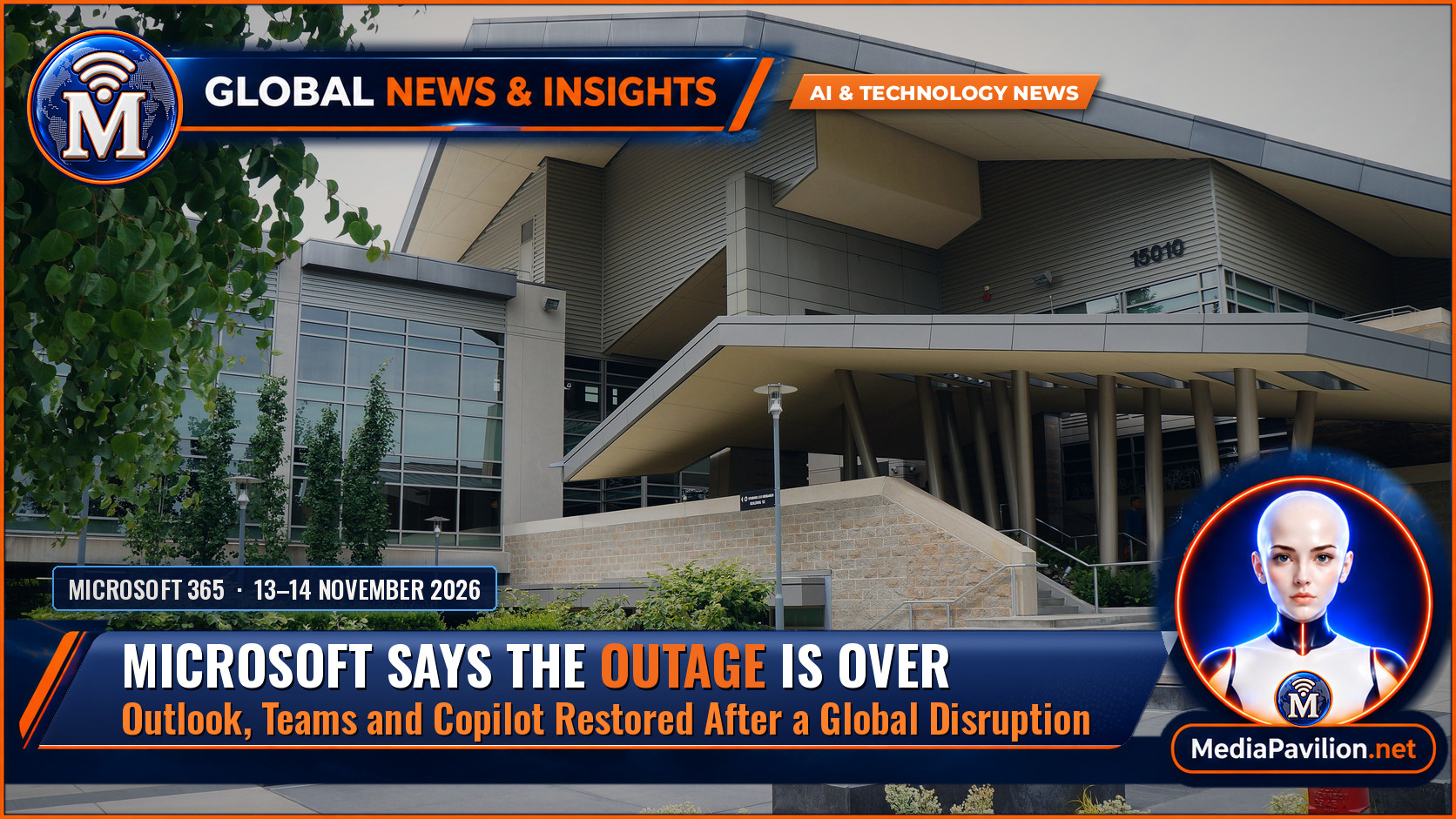
Microsoft Outage: Services Restored After Global Disruption
Microsoft said on Saturday that its services were fully restored after a global outage that knocked out Outlook, Teams, Copilot and other Microsoft 365 tools for hours, and in some places for the better part of a day. The company apologised, said the disruption was a technical problem rather than a cyberattack or an AI failure, and promised a full post-incident report.
Reports of problems began shortly after noon Eastern Time on Thursday and spread to more than 70 countries, according to WIRED, which cited Downdetector. Governments, hospitals, courts, banks and airlines were among those affected. Here is what went wrong, what Microsoft has said, and what users should check now that mail and chat are coming back.
What Went Down and How Long Did It Last?
The first public signs were Outlook outage reports on Downdetector just after 12 p.m. Eastern Time on Thursday. Microsoft first said it was investigating a problem that appeared limited to North America, then the disruption spread worldwide. Outlook email, SharePoint Online, Teams, the Copilot assistant and other Microsoft 365 apps were all hit, The Verge reported.
By Friday morning some users, including Verge staff, were getting back into their inboxes, though mail could still be delayed and some features were running in a degraded state. Just before noon on Friday, Microsoft said it was seeing “broad recovery and stability across our services.” The Associated Press reported on Saturday that the company had addressed the underlying issue and restored service to affected customers and regions.
What Did Microsoft Say Caused the Outage?
In a statement quoted by The Verge and WIRED, Microsoft said: “This was a technical issue not related to cyber or AI / agents. The incident was introduced by an issue during an earlier network capacity upgrade that surfaced following a recent network change.” The company said it had addressed the underlying issue and restored services gradually, “validating stability at each stage,” because of the scale of demand. It also said it had not found evidence of malicious activity, and that a statement reported by Sky News ruled out “cyber, AI/agents, DDOS, etc.”
The Verge, citing sources, reported that the outage was linked to configuration changes in Azure virtual networks. Microsoft has not confirmed that detail in its public statement and has said it will publish a full review once that work is complete. You can follow official service updates on the Microsoft 365 status site.
Who Was Affected?
Downdetector logged reports from more than 70 countries. Anadolu Agency said Japan’s government email services went down and New Zealand suspended visa processing until further notice. WIRED reported disruptions at governments from Japan to the United States, problems for airlines trying to reach customers, interruptions at hospitals, and delays at some law-enforcement and emergency services. Courts and banks were also among those affected, according to Associated Press reporting republished on Saturday.
The outage was separate from Friday’s nationwide FAA ground stop. Microsoft said it had “no indication” that the flight halt was related to any of its services, Anadolu Agency reported. We have a separate explainer on the FAA ground stop and the delays that followed.
What Should You Do If Your Email or Teams Is Still Catching Up?
Microsoft said it increased the queue time for emails to 48 hours so that messages people tried to send while systems were down still had a chance to be delivered. Independent researcher Jonathan Leitschuh told WIRED that users should expect “a flood of notifications” as subsystems come back, and that inboxes may look messy for a while. If something still will not send or load, check the status site, try the web versions of Outlook or Teams, and avoid deleting large batches of mail until the queues have cleared.
A long outage is also a reminder to keep copies of important files somewhere other than a single cloud account. Our guide to how to back up your computer and phone walks through the 3-2-1 rule. If you use public networks to catch up on mail while travelling, it is worth reading whether public Wi-Fi is safe before you sign in.
Will Microsoft Explain More?
Yes, eventually. The company said it would provide a full post-incident report once its review is complete. Until that report appears, the public account rests on Microsoft’s own statements: a technical fault tied to a network capacity upgrade, not a cyberattack and not an AI agent running out of control. That official line is the one to watch for updates, rather than unofficial claims about the cause.
Featured image: Building 92 on Microsoft’s Redmond campus, by Jiaqian AirplaneFan / Wikimedia Commons, CC BY 3.0. File photo.
- The Verge — Microsoft’s massive Outlook outage might be over (13 November 2026).
- WIRED — Microsoft 365 Crawls Back to Life After a 24-Hour Outage (13 November 2026).
- Associated Press — Microsoft says services fully restored after hourslong global outage (14 November 2026).
- Anadolu Agency — Morning Briefing: Nov. 14, 2026 (14 November 2026).
- Microsoft — Microsoft 365 service status.