
New Federal Loan Caps Push Graduate Students Towards Private Lenders
New caps on federal student loans are pushing graduate students towards private lenders in record numbers, with Sallie Mae reporting a 119% jump in graduate lending and SoFi’s student loan business nearly doubling in a year. The shift, reported by the Associated Press and The Washington Post, comes as millions of borrowers leaving the defunct SAVE repayment plan face higher monthly bills and the threat of being moved to a new plan automatically.
The changes stem from President Donald Trump’s One Big Beautiful Bill Act, which ended the Grad PLUS programme for new borrowers from 1 July 2026 and set firm limits on how much graduate and professional students can borrow from the federal government. Until this year, graduate students could borrow federally up to the full cost of their degree.
What Are the New Federal Student Loan Limits?
Under the new rules, students in professional degree programmes such as medicine, law and dentistry can borrow up to $200,000 in federal loans, while other graduate students are capped at $100,000. New borrowers also face a lifetime federal borrowing limit of $257,500, according to the AP report.
Jordan Matsudaira, director of the Postsecondary Education and Economics Research Center at American University, estimates that more than half a million borrowers will need to find an extra $20,000 a year outside the federal system. Students in medicine, law and dentistry face the biggest gaps, his analysis suggests.
- Professional degrees (medicine, law, dentistry): up to $200,000 in federal loans
- Other graduate programmes: up to $100,000
- Lifetime limit for new borrowers: $257,500
- Grad PLUS: closed to new borrowers from 1 July 2026
How Fast Are Private Student Loans Growing?
Very fast. SoFi reported $2.9 billion in student loan originations in the third quarter, nearly twice the figure a year earlier. Sallie Mae, which holds more than half of the private student loan market, said its graduate loans rose 119% year on year. South Carolina Student Loan, a non-profit lender, reported a 400% increase in graduate borrowing this year.
Some universities are stepping in themselves. The University of Kansas School of Law has started issuing its own loans and has approved eight so far. Its associate dean of admissions, Steven Freedman, said private banks now have a large say in who can afford law school, the AP reported. Sallie Mae chief executive Jon Witter said uncertainty over the rules delayed financial aid packages and pushed the peak of lending into October.
Who Is Being Left Out?
Not every student can get a private loan, which usually depends on credit history or a creditworthy co-signer. The AP described a 25-year-old physician assistant student in New York who borrowed $6,000 federally for her first trimester and covered the rest with private loans co-signed by her mother. A 25-year-old Howard University dental student who was turned down by several private lenders raised about $76,000 through crowdfunding to pay for his first year.
The Trump administration says the caps will curb excessive borrowing and push colleges to look at their prices. The American Enterprise Institute has counted at least 40 schools that have cut programme costs since the rules took effect. Critics argue that most colleges cannot simply lower tuition and that the caps will hit students from low-income families hardest. A court fight over which programmes count as “professional” ran until just before the rules began, and a federal judge temporarily blocked part of the rule, letting nursing and physical therapy students reach the higher limits for now.
What Is Happening to Borrowers Leaving the SAVE Plan?
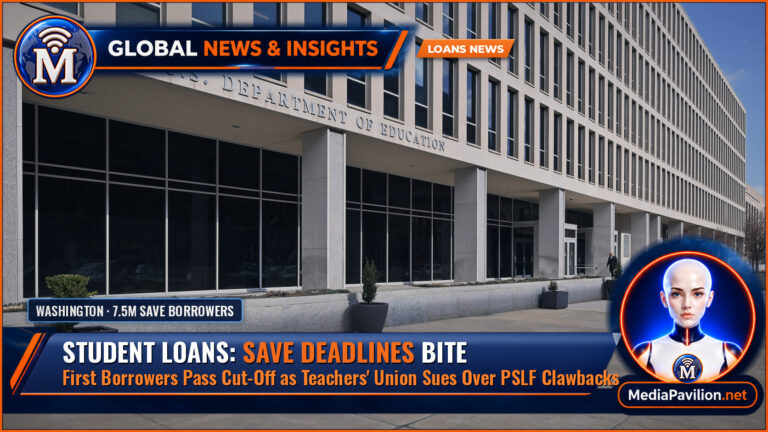
Separately, about 7.5 million borrowers enrolled in the Biden-era SAVE plan have had to choose a new repayment plan after the Education Department said SAVE was unlawful and would end. By early November, about 2 million had done so, NBC News reported. Those who missed their final deadline are due to start receiving notices this month telling them they have been moved to a new plan automatically. The first final deadline fell on 29 October for the earliest group, Texas Public Radio reported, and many borrowers face payments hundreds of dollars higher than under SAVE.
Pressure is also building in Congress. On 5 November, Representative Ayanna Pressley and Senator Elizabeth Warren led 31 colleagues in a letter to Education Secretary Linda McMahon about errors in payment calculations, balances and forgiveness counts flagged by student loan ombudspersons in seven states and Washington, DC. That follows the PSLF lawsuit filed by the American Federation of Teachers last month.
What Should Borrowers Do Now?
Before turning to a private lender, students should use every federal option first, because federal loans come with protections that private loans do not, including income-driven repayment, deferment and Public Service Loan Forgiveness. Our guide to federal vs private student loans explains the differences, and our comparison of RAP vs IBR repayment plans can help former SAVE borrowers pick a plan before one is chosen for them.
Borrowers can log in at StudentAID.gov to find their servicer and use the official loan simulator. Anyone still on SAVE should check their deadline; our explainer on SAVE plan deadlines sets out what happens next.
Featured image: Graduates at the OSU-Cascades 2023 commencement ceremony, by Oregon State University / Wikimedia Commons, CC BY-SA 2.0. File photo.
Sources
- AP News — New limits on federal student loans are steering many borrowers toward private lenders (6 November 2026).
- The Washington Post — New limits on federal student loans are steering many borrowers toward private lenders (6 November 2026).
- NBC News — Share your experience with changes to student loan repayment plans (6 November 2026).
- Texas Public Radio — Student loan repayment deadlines are here. Here’s what borrowers need to know (7 November 2026).
- Office of Rep. Ayanna Pressley — Pressley, Warren, 31 colleagues press Dept. of Education Secretary on federal student loan servicing failures (5 November 2026).